The Sonoran Desert is one of the most pollinator-rich ecosystems on Earth. More than 1,000 native bee species call it home — more than any other region in North America. Add in resident and migratory hummingbirds, dozens of butterfly species, and specialized moths that pollinate saguaro blossoms at night, and you have the raw material for a garden that buzzes, hovers, and flutters from February through November.
Building a desert pollinator garden isn't about creating a manicured English cottage border. It's about working with what the desert already does well — layered plant communities, bloom sequences that track seasonal rains, and the deep relationships between native plants and the insects that evolved alongside them.
Know Your Pollinators Before You Plant
Different pollinators need different things, so it pays to design for several groups at once.
Native Bees
The Sonoran Desert's bee diversity is staggering. Sonoran bumblebees (Bombus sonorus) emerge in spring and work large flowers like penstemon and desert willow. Dainty long-horned bees (Melissodes spp.) specialize in sunflower-family plants. The sunflower bee (Diadasia enavata) times its entire life cycle around the bloom of prickly pear cactus (Opuntia spp.). Unlike honeybees, the vast majority of these natives nest in the ground or in hollow stems — which means your garden design needs to accommodate their habitat needs as much as their food needs.
Hummingbirds
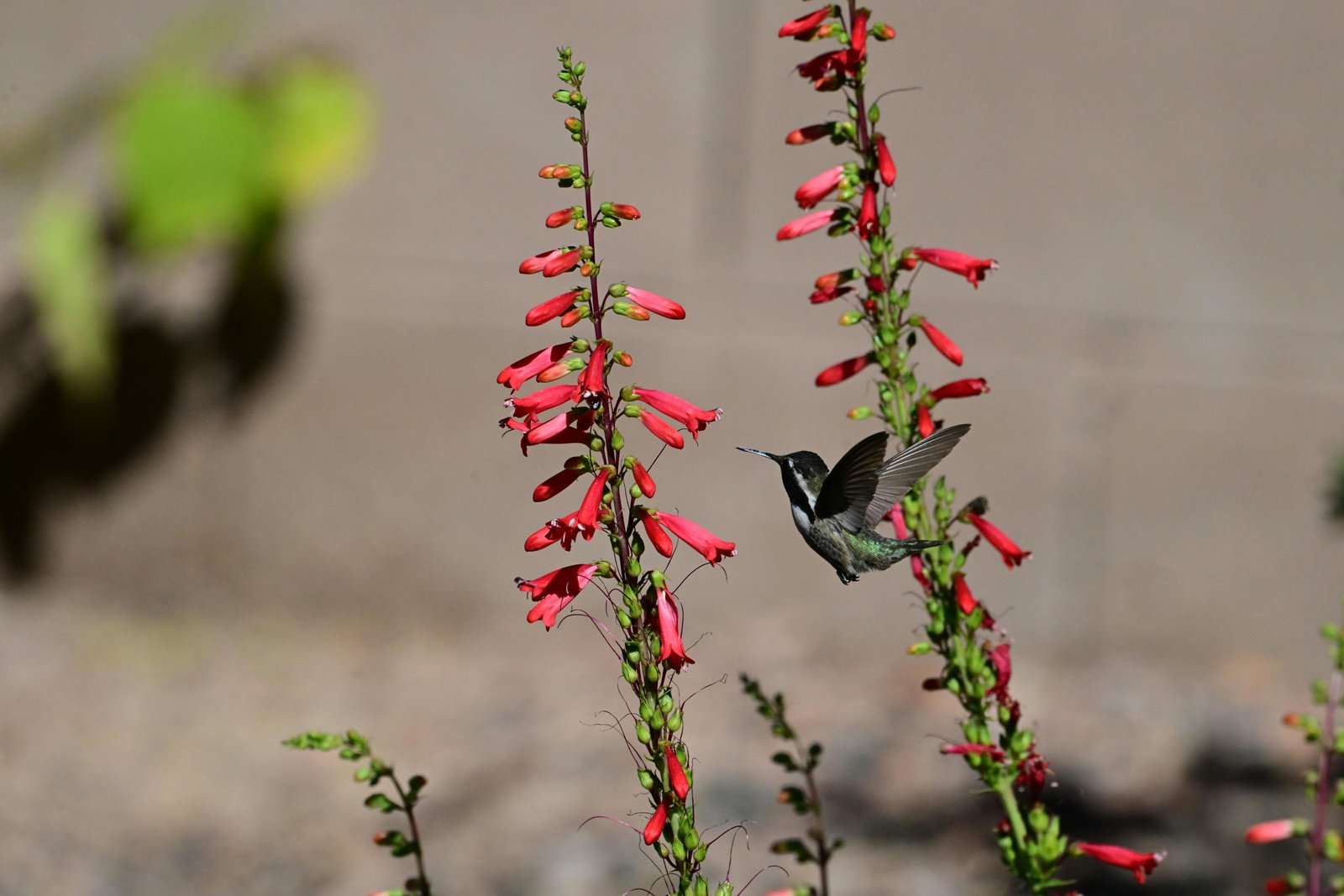
Three hummingbird species are regular visitors in the Sonoran Desert: Anna's hummingbird (Calypte anna), which is resident year-round; Costa's hummingbird (Calypte costae), which peaks in late winter and spring; and the broad-tailed hummingbird (Selasphorus platycercus), which passes through on migration. All three are drawn to tubular red, orange, and pink flowers — penstemon, salvia, and ocotillo are magnets.
Butterflies and Moths
Queen butterflies (Danaus gilippus), painted ladies (Vanessa cardui), and giant swallowtails (Papilio cresphontes) patrol desert gardens for nectar, but they also need host plants for their caterpillars. Desert milkweed (Asclepias subulata) supports queens. Senna (Senna covesii, Coues' cassia) hosts several sulphur butterflies. Without host plants, adult butterflies will move on.
Build a Year-Round Bloom Calendar
The goal is to keep something flowering in every season. In the Sonoran Desert, that's entirely achievable with the right plant palette.
"A pollinator garden isn't measured by how many plants you have — it's measured by how many weeks of the year something is in bloom."
Late Winter and Spring (February–April)
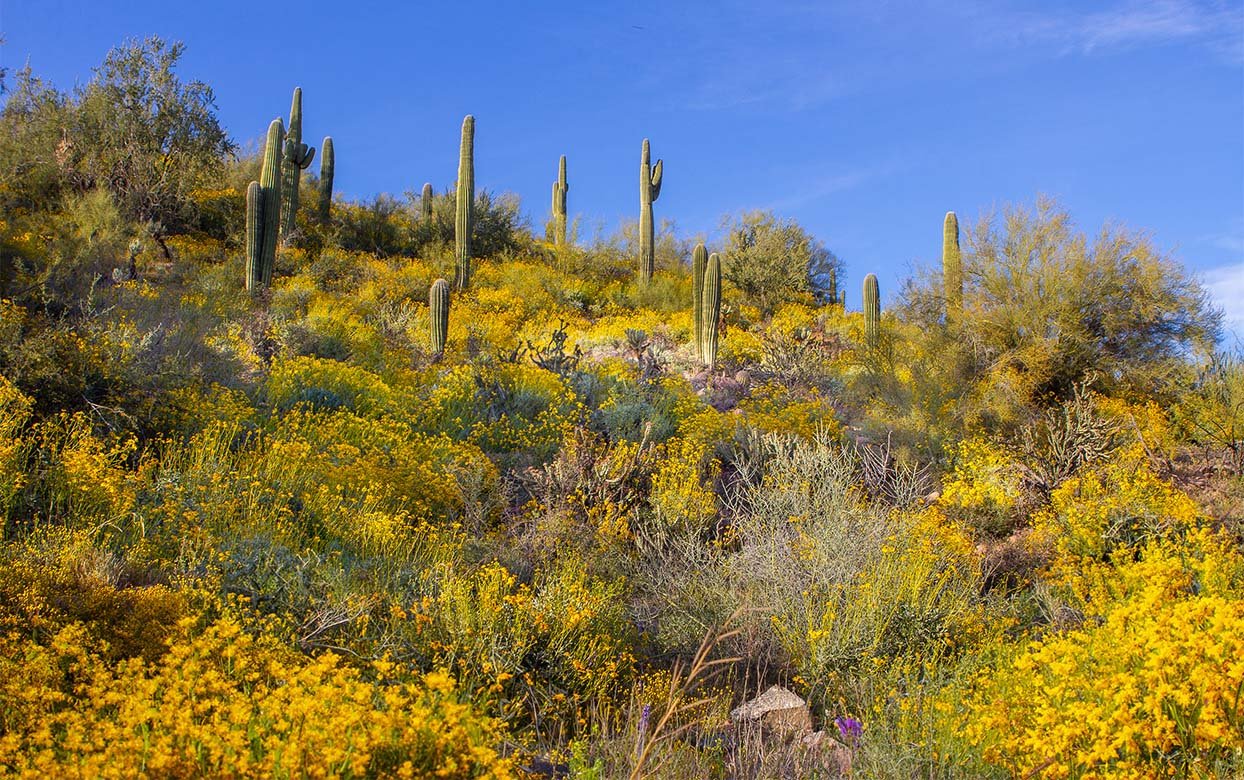
This is the desert's most dramatic flowering season, and your most important window for hummingbirds. Plant Parry's penstemon (Penstemon parryi) for its towering pink spikes and firecracker penstemon (P. eatonii) for brilliant red tubes that hummingbirds dive into all season. Brittlebush (Encelia farinosa) carpets hillsides in yellow and draws an enormous variety of native bees. Desert marigold (Baileya multiradiata) blooms early and keeps going into summer.
This is also the ideal season to get new plants established — timing that aligns with advice in our guide on the best time of year to plant in the desert.
Summer Monsoon Season (July–September)
The monsoon triggers a second wave of bloom. Desert willow (Chilopsis linearis) produces orchid-like pink flowers that hummingbirds and carpenter bees adore. Sacred datura (Datura wrightii) opens at dusk and is the primary food source for hawkmoths, including the white-lined sphinx moth (Hyles lineata) — one of the few insects that can reach deep into the flower's long floral tube. Autumn sage (Salvia greggii) blooms continuously from late spring through frost and remains one of the highest-value hummingbird plants in the Southwest.
Fall and Winter (October–January)
Don't let the garden go dark. Globe mallow (Sphaeralcea ambigua) in orange or red blooms intermittently all year but peaks in fall and again in spring. Desert senna (Senna covesii) produces cheerful yellow flowers well into November. In mild low-desert winters, aloe species like Aloe maculata and Aloe arborescens keep hummingbirds fueled when little else is blooming.
Design Principles for Maximum Pollinator Activity
Plant in Masses, Not Singles
A single penstemon is hard for a bee to find. A sweep of twenty plants — even a modest 6-foot-wide cluster — is visible from dozens of yards away and creates an efficient foraging target. Aim for groupings of at least five to seven plants of any given species. Southwest native wildflower seed mixes are a cost-effective way to establish large drifts of annual and perennial species quickly.
Create Layers
Structure your planting like the desert itself: a canopy layer, a shrub layer, and a low ground-cover layer. A desert willow or native shade tree provides the canopy while also attracting hummingbirds. Medium shrubs like salvia, globe mallow, and desert marigold form the mid-layer. Low perennials and spreading ground covers like trailing indigo bush (Dalea greggii) fill the base. This layered structure gives pollinators feeding opportunities at every height and keeps the garden productive through seasonal transitions.
Integrate Companion Plants Strategically
Pairing leguminous plants like fairy duster (Calliandra eriophylla) and desert ironwood (Olneya tesota) with flowering perennials improves soil nitrogen and creates microclimates that benefit neighboring plants. Our guide to desert companion planting goes deeper on these relationships.
Provide Habitat, Not Just Food
Feeding pollinators is only half the job. They also need places to nest, overwinter, and raise young.
Bare Soil Patches
Roughly 70 percent of native bees nest in the ground. Leave areas of compacted, bare, or sparsely vegetated soil — especially in sunny, south-facing spots. This is counterintuitive if you're used to mulching everything, but it's one of the most effective things you can do for ground-nesting bees like digger bees (Anthophora spp.) and sweat bees (Halictus spp.).
Stem and Wood Nesting Sites
Leave hollow or pithy stems from plants like elderberry, sunflower, and giant sacaton grass standing through winter. Mason bees and leafcutter bees pack these stems with pollen and eggs. A native bee house with mixed stem diameters can supplement natural nesting sites, especially in newer gardens where mature woody plants are still establishing.
Water
A shallow dish with pebbles for perching — kept fresh every few days — will draw bees, butterflies, and even birds. Butterflies also practice "puddling," drinking from wet soil to absorb minerals. A small patch of perpetually damp earth near a slow drip emitter serves this purpose well. For more on desert-appropriate watering strategies, see our guide on watering desert plants without overwatering them.
What to Avoid
Skip neonicotinoid insecticides entirely — they persist in soil and pollen and are acutely toxic to bees even at low doses. Be skeptical of nursery plants labeled "pollinator-friendly" that may have been pre-treated with systemic pesticides. Buy locally grown native plants from reputable native plant nurseries, or propagate your own from seed or cuttings. Avoid double-flowered cultivars of native plants (those extra petals often replace or block the reproductive parts that produce nectar and pollen).
Getting Started
If you're building a pollinator garden from scratch, start with three or four high-value plants that bloom in different seasons: Parry's penstemon for spring, desert willow for summer, desert marigold for fall and winter. Establish these first, observe which pollinators visit, and expand from there. If you're just beginning to design your overall landscape, our beginner's guide to starting a desert garden covers the soil prep, tool selection, and plant sourcing fundamentals that will set your pollinator plantings up for success.
For detailed seasonal planting windows, pair this guide with our overview of the best time of year to plant in the desert — getting the timing right makes a bigger difference than almost any other factor when establishing native perennials.
This post contains affiliate links. We may earn a small commission if you purchase through them, at no extra cost to you.