The best time to plant in the desert is fall (September–November). This gives plants time to establish roots over the mild winter before their first brutal summer. Spring (February–April) is the second-best window. Avoid planting in peak summer (June–August) — extreme heat kills new plants before roots can establish.
Desert gardening requires careful attention to seasonal timing. The extreme temperature swings and rapidly shifting soil conditions in arid climates make planting windows crucial for plant survival and success. Get it right and the desert does much of the work for you. Get it wrong and you spend the season fighting to keep new plants alive — often losing anyway.
Why Timing Matters So Much in Desert Gardening
Desert soils heat quickly and cool rapidly, which significantly affects root development. During summer, intense heat can damage tender roots and accelerate water evaporation. Winter cold can stunt growth or harm sensitive plants. Stable conditions allow plants to develop stronger roots and handle environmental stress more effectively.
A new plant doesn't just need to survive the day you put it in the ground — it needs to establish a root system deep enough to access subsoil moisture. That takes weeks to months, and in the desert, the window for that process is narrow.
Optimal Seasons for Desert Planting
| Desert Region | Best Fall Window | Best Spring Window | Avoid |
|---|---|---|---|
| Low Sonoran (Phoenix, Tucson) | Sep 15 – Nov 30 | Feb 15 – Apr 1 | Jun 1 – Aug 31 |
| Chihuahuan (El Paso, Las Cruces) | Sep 1 – Nov 15 | Mar 1 – Apr 15 | Jun – Aug |
| Mojave (Las Vegas) | Sep 15 – Nov 15 | Mar 1 – Apr 15 | Jun 1 – Sep 15 |
| High Desert (Santa Fe, Flagstaff) | Aug 15 – Oct 15 | Apr 1 – May 15 | Jun – Aug |
Fall: Your Desert Garden's Best Friend
Early fall represents the ideal planting season for most desert plants. It's also the best time to establish companion plant groupings — planting nurse trees and their understory neighbors together lets relationships form before stress season arrives. Soil temperatures remain warm enough to encourage root establishment, yet summer's harshest heat has subsided. This timing allows plants to develop resilience before winter dormancy arrives, preparing them for spring and summer challenges ahead.
A tree or large shrub planted in October and watered deeply once a week through winter will be dramatically more established by the following summer than the same plant put in the ground in March. The roots have had months to extend deep into the soil where moisture is more stable.
Spring: The Runner-Up
Late February through early April works well for annual flowers, vegetables, and certain perennials. Early spring soil offers warmth without excessive heat. Spring-planted specimens typically need extra watering attention as they enter their first desert summer — the root system hasn't had as long to develop, so supplemental water becomes more critical.
Aim to have spring plantings in the ground by mid-March in the low desert. After that, temperatures climb fast and the establishment window closes quickly.
Plants Ideal for Fall Planting
Desert Shrubs and Trees: Palo Verde, Desert Willow, and Mesquite establish robust root systems during autumn planting. These are your garden's structural backbone — give them a full year before the first desert summer and they'll reward you for decades.
Perennials and Succulents: Agave, Aloe Vera, and Yucca thrive when planted in fall, developing steadily through cooler months. By spring they're well-rooted and ready for the growing season's burst.
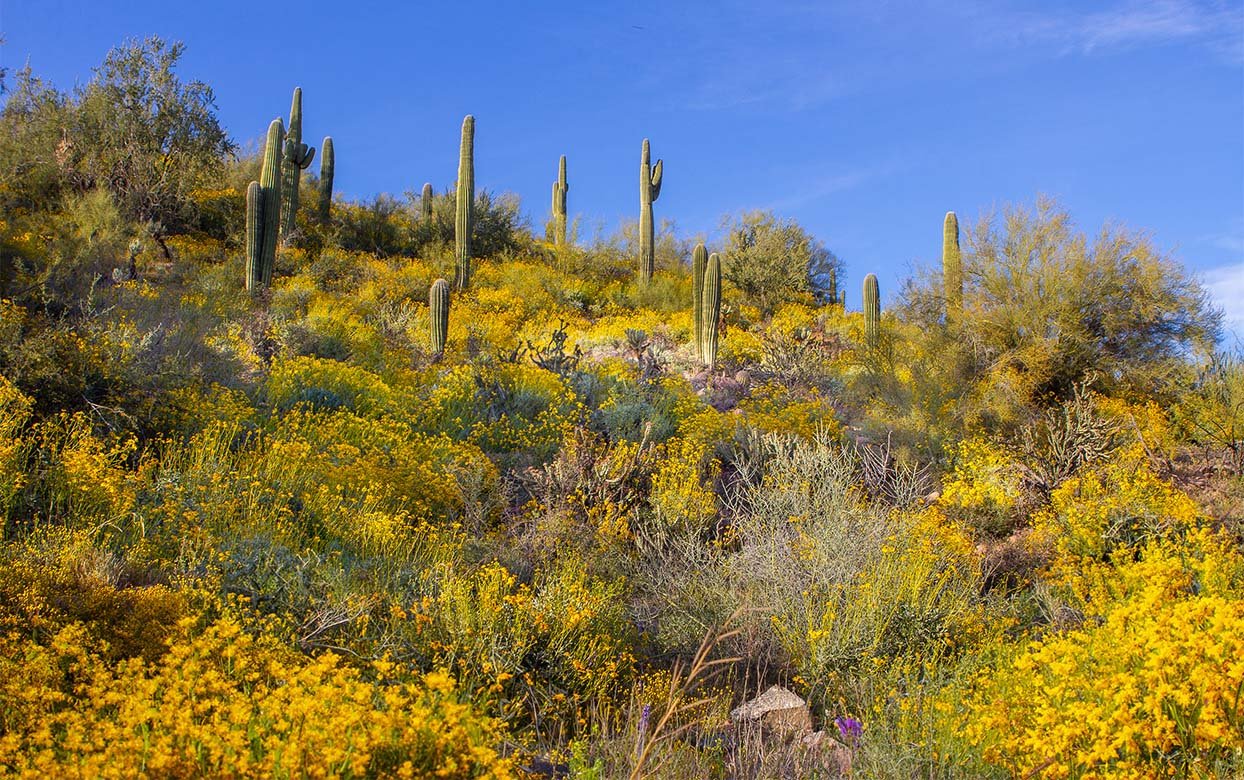
Bulbs and Wildflowers: Desert Lily bulbs and California Poppy seeds germinate with winter rains, producing spectacular spring color. Sow wildflower seed in fall and let the rains do the work.
Essential Products for Planting Success
- Drip Irrigation Kits: Deliver water directly to roots, reducing evaporation and ensuring even moisture distribution. A timer-controlled system is the single best investment for a desert garden.
- Organic Soil Amendments: Enrich poor desert soils with nutrient-rich compost, especially for edibles and non-native plants. Native desert plants need minimal amendment.
- Protective Mulch: Shields roots from temperature extremes and retains moisture. Apply 3–4 inches around all plantings for maximum benefit.
- Garden Shade Cloth: Reduces plant stress from intense sun exposure during the establishment period, especially useful for spring plantings heading into their first summer.
Common Beginner Questions
Can I plant during summer? Avoid peak summer months (June–August) when possible; extreme heat stresses young plants before roots can establish. The exception is during active monsoon season, when regular rainfall reduces the burden — but monitor closely for breaks in the rain.
How do I protect plants from cold snaps? Frost covers or blankets provide insulation against surprise freezes. Most desert natives at low elevations are frost-hardy, but frost-tender species like bougainvillea, citrus, and tropical succulents need protection when temperatures approach freezing.
What if I missed fall planting? Focus on very early spring planting and maintain consistent watering through summer heat. You'll need to be more attentive, but spring-planted natives can establish successfully with care.
Tips for Successful Seasonal Planting
- Use a soil thermometer — plant when soil temperatures range between 60°F and 75°F for best root establishment results.
- Select native plants that naturally adapt to desert climate variations. They're built for this and will outperform non-natives with far less intervention.
- Water deeply but infrequently to encourage deep root systems. Shallow, frequent watering creates shallow-rooted plants that struggle through summer heat.
Fall and early spring are your windows. Understand the desert's calendar and you'll lose fewer plants, spend less on water, and spend more time enjoying what you've grown.
Ready to pick your plants? Read our beginner's desert garden guide for help choosing the right species, preparing your soil, and setting up irrigation that works in an arid climate.