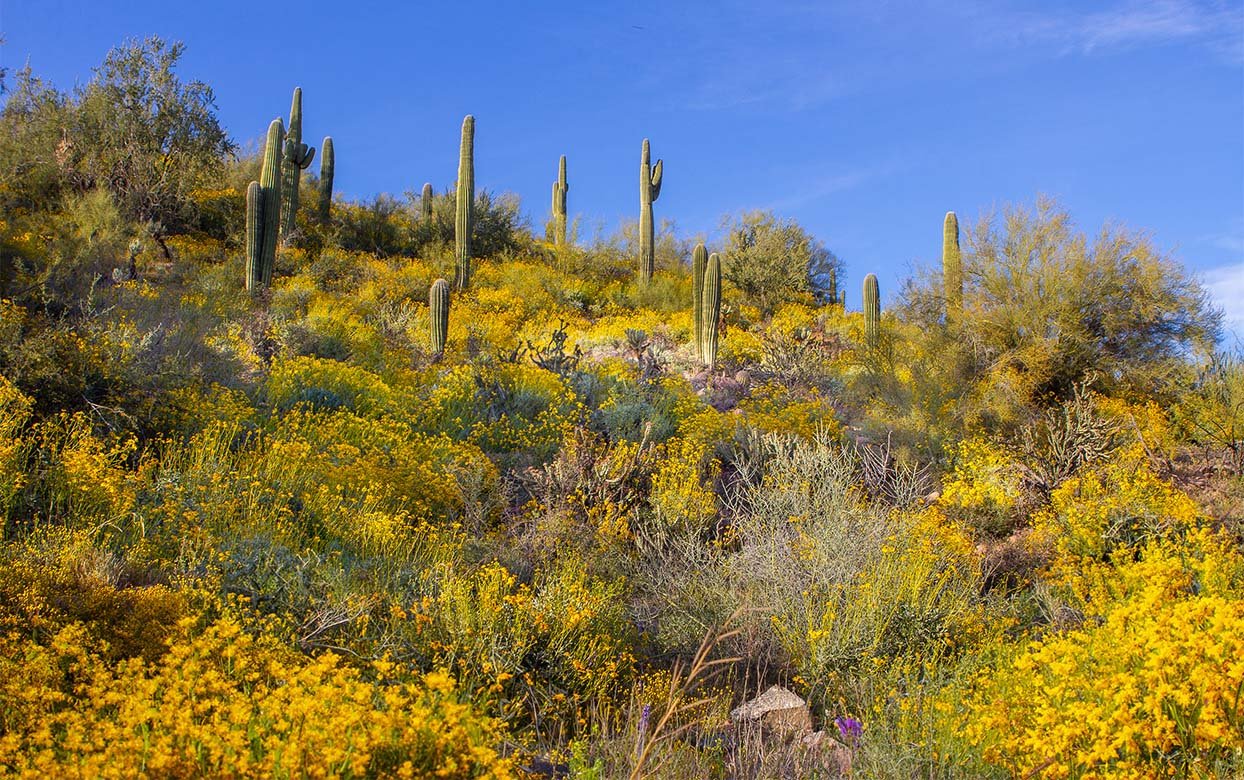
Desert companion planting works by pairing plants that evolved together — nurse trees shelter young cacti from frost, nitrogen-fixing legumes enrich the soil for neighboring plants, and deep-rooted anchors create microclimates for understory species. The most effective desert combinations mirror the natural plant communities of the Sonoran and Chihuahuan deserts, where these partnerships developed over millennia.
What Is Companion Planting — and Why Does It Matter in the Desert?
In temperate gardens, companion planting means tucking basil next to tomatoes or marigolds among beans. In the desert, the stakes are higher and the rewards are more elemental. Here, plants share water, shield each other from blistering sun, fix nitrogen into dust-dry soil, and call in the pollinators that keep a garden alive. Understanding how individual desert plants handle water helps you predict which companions will thrive side by side.
The Sonoran and Chihuahuan deserts are, surprisingly, ecologically rich places. Native plant communities didn't evolve in isolation — they grew up together, each species filling a niche, supporting its neighbors in ways that took botanists decades to fully understand. When you apply that logic to your own backyard, you stop fighting the landscape and start working with it.
The Nurse Plant Relationship
Look closely at any mature saguaro (Carnegiea gigantea) in the wild and you'll almost always find the skeletal remains of a palo verde or mesquite nearby. That's no coincidence. Young saguaros need a nurse plant — something that shades their first few years of life, protects them from frost, and gradually builds organic matter in the surrounding soil.
In your garden, this ancient relationship translates directly:
- Palo verde (Parkinsonia florida or P. microphylla) as a canopy tree with golden barrel cactus (Echinocactus grusonii), Mexican fence post cactus (Pachycereus marginatus), or young saguaros planted beneath its canopy
- Ironwood (Olneya tesota) shading agaves and young ocotillo (Fouquieria splendens) on slopes where afternoon sun is brutal
The nurse plant does double duty: dappled shade reduces soil temperature and slows evaporation, while falling leaf litter adds a thin but meaningful layer of organic matter around the roots below.
Nitrogen Fixers and Their Hungry Neighbors
Several desert legumes fix atmospheric nitrogen, quietly enriching the soil for neighboring plants that lack their own fertilizer factory. Use them deliberately.
Mesquite + Prickly Pear + Native Herbs
Velvet mesquite (Prosopis velutina) fixes nitrogen and creates deep shade. Plant it as an anchor, then let prickly pear (Opuntia engelmannii) sprawl on its sunny side — the cactus tolerates the dry conditions beneath and forms a thorny wildlife habitat. On the shaded north side of the mesquite, native herbs like desert lavender (Hyptis emoryi) and chuparosa (Justicia californica) thrive with far less water than they'd need in full sun.
Blue Palo Verde + Wildflowers
Blue palo verde (Parkinsonia florida) blooms explosively in spring and then filters summer sun into a shifting lattice of light and shadow. Scatter desert marigold (Baileya multiradiata), globe mallow (Sphaeralcea ambigua), and Mexican hat (Ratibida columnifera) in its outer canopy radius. These perennials bloom at different times, ensuring something is always flowering for bees, butterflies, and hummingbirds from February through November.
Agave and Its Community
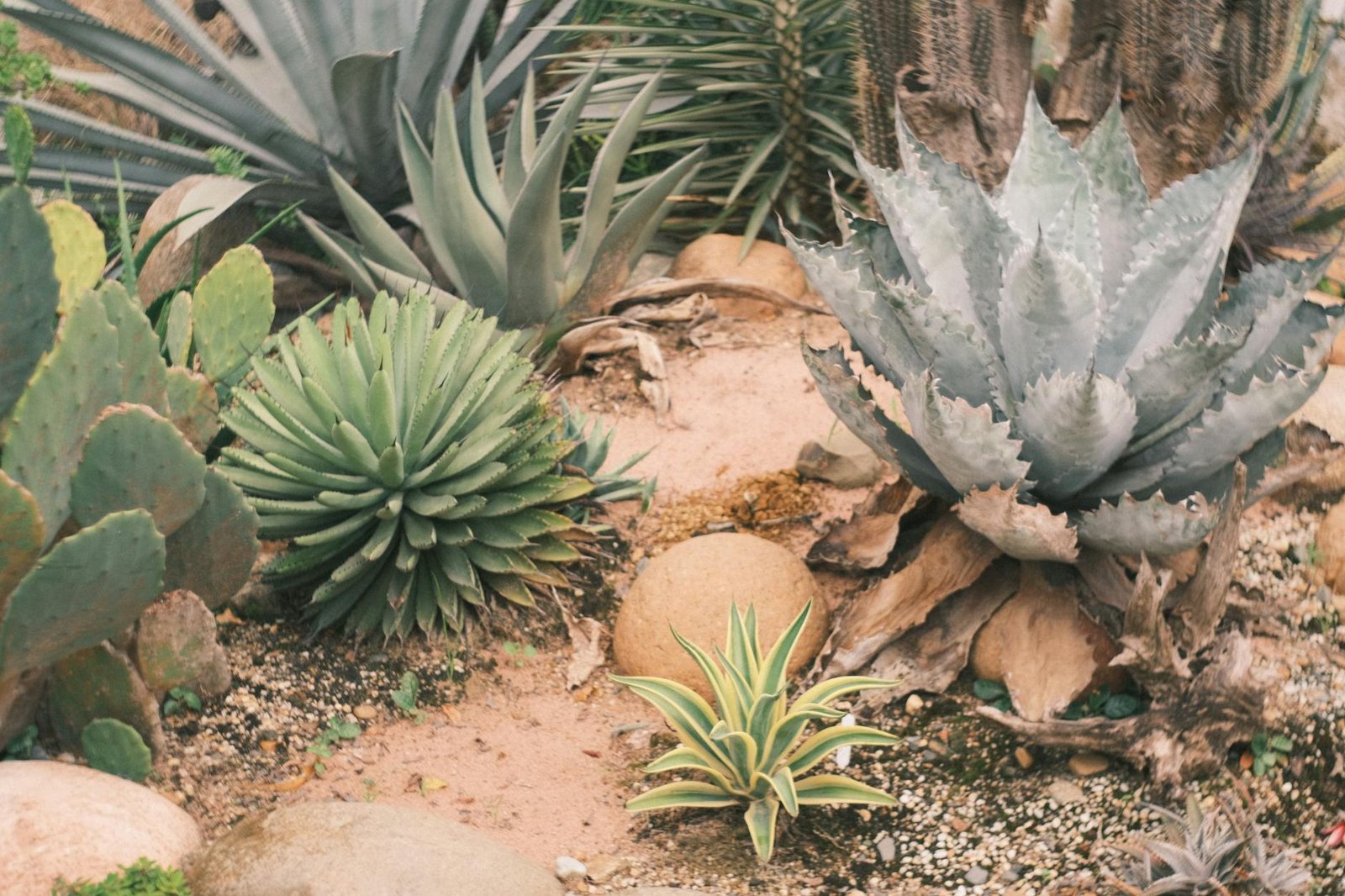
Agave doesn't just anchor a landscape — it supports one. A large blue agave (Agave americana) or Weber's agave (Agave weberi) creates a microclimate: warm soil on the south-facing side, damp shade to the north, and thick dead-leaf mulch accumulating at its base year after year.
Plant agave not as a specimen, but as a hub. Everything else finds its place around it.
Around a mature agave, consider these companions:
- Blackfoot daisy (Melampodium leucanthum) — a perennial ground cover that blooms nearly year-round, preferring the well-drained margins at agave's edge
- Autumn sage (Salvia greggii) — a hummingbird magnet that benefits from agave's shelter during frost events
- Desert spoon (Dasylirion wheeleri) — adds dramatic vertical contrast and shares the same lean-soil, full-sun requirements
As the agave eventually sends up its towering bloom spike — a once-in-a-lifetime event before the parent plant dies — it becomes a feeding station for orioles and hawk moths. The pups that emerge around the base replace the parent seamlessly, and the cycle continues.
The Three Sisters of the Desert
The classic Three Sisters of the Southwest — corn, beans, and squash — represent a companion planting system the Tohono O'odham, Hopi, and other desert peoples practiced long before European contact. Adapted for today's low-desert gardens:
- Tepary beans (Phaseolus acutifolius) — the most drought-tolerant bean in North America, fixing nitrogen while producing pods through brutal summer heat
- Hopi blue corn or other heritage varieties — grows tall enough to create light shade for squash at its feet
- Desert-adapted squash like Magdalena Big Cheese or Hopi orange squash — sprawls as living mulch, shading the soil and suppressing weeds beneath the corn
Plant these together in a raised garden bed or a prepared mound of amended native soil after the last frost in your zone — typically mid-April in the low Sonoran Desert, late April in the Chihuahuan. They'll support each other through the monsoon season and into early fall harvest.
Quick-Reference: Desert Companion Plant Combinations
| Anchor Plant | Good Companions | Why It Works |
|---|---|---|
| Velvet Mesquite | Prickly pear, desert lavender, chuparosa | Nitrogen fixing, nurse shade, wildlife habitat |
| Blue Palo Verde | Desert marigold, globe mallow, penstemon | Filtered light, sequential bloom Feb–Nov |
| Blue Agave | Barrel cactus, desert zinnia, autumn sage | Microclimate creation, mulch accumulation |
| Saguaro | Any palo verde or mesquite as nurse | Frost protection, organic matter buildup |
| Desert Willow | Native grasses, autumn sage, blackfoot daisy | Hummingbird habitat, light filtered shade |
| Ironwood | Young saguaros, ocotillo, agave | Deep canopy nurse, 500+ dependent species |
What Not to Plant Together
Companion planting is as much about avoidance as combination. A few pairings to skip:
- Keep eucalyptus away from everything. It releases allelopathic chemicals that suppress neighboring plant growth — beautiful as a windbreak, but isolate it from garden beds.
- Buffalo grass (Bouteloua dactyloides) and Bermuda grass lawns compete aggressively with shrubs and cacti for water. Desert natives planted near turf areas rarely thrive — the irrigation schedule designed for grass drowns deep-rooted desert plants over time.
- Avoid planting oleander (Nerium oleander) near vegetable beds. It's toxic throughout and attracts the oleander aphid, which spreads readily to neighboring plants.
- Large agaves planted too close to desert willow (Chilopsis linearis) can crowd out the shallow surface roots that willow depends on for establishment.
Designing a Layered Desert Plant Community
The most productive desert companion plantings mirror the natural desert's layered structure: a tall canopy tree, a mid-story shrub layer, a low ground cover, and a surface of gravel and organic debris that holds moisture and moderates temperature swings.
A proven four-layer combination for a Sonoran garden bed:
- Canopy (10–25 ft): Palo verde or desert willow
- Mid-story (3–6 ft): Autumn sage, brittlebush (Encelia farinosa), or bursage (Ambrosia deltoidea)
- Ground layer (under 2 ft): Trailing lantana (Lantana montevidensis) or low-growing penstemon species
- Edge planting: Prickly pear or hedgehog cactus (Echinocereus triglochidiatus) as a structural spine-barrier
This stack delivers four seasons of bloom, year-round structure, and a wildlife habitat that feeds and shelters insects, birds, and lizards — often without supplemental water by year three once plants are fully established. The desert does the rest.
Getting your companions right starts with planting at the right moment. Read The Best Time of Year to Plant in the Desert and Why It Matters to learn how timing your plantings correctly gives companion relationships the best chance to take hold before stress season arrives.