The best desert shade trees for low-maintenance arid gardens are Palo Verde, Desert Museum Palo Verde, Desert Willow, Velvet Mesquite, and Ironwood. Each is native or adapted to the Sonoran, Chihuahuan, or Mojave desert and thrives without supplemental irrigation once established.
In a landscape defined by light and heat, a tree earns its place twice — once by growing, and again by the shadow it throws across the hot afternoon ground. Desert trees are not the towering oaks of temperate climates, but they carry their own magnificence: cloud-like canopies of blue-green, explosive spring color, sculptural winter silhouettes. They cool your patio by 20 degrees, slow evaporation from the soil beneath them, and give birds and pollinators a layered habitat. Plant one well, and it will outlive your tenure in the house.
Here is a practical guide to the best trees for hot, arid gardens — Sonoran, Mojave, and Chihuahuan included.
Why Trees Are Essential in a Desert Garden
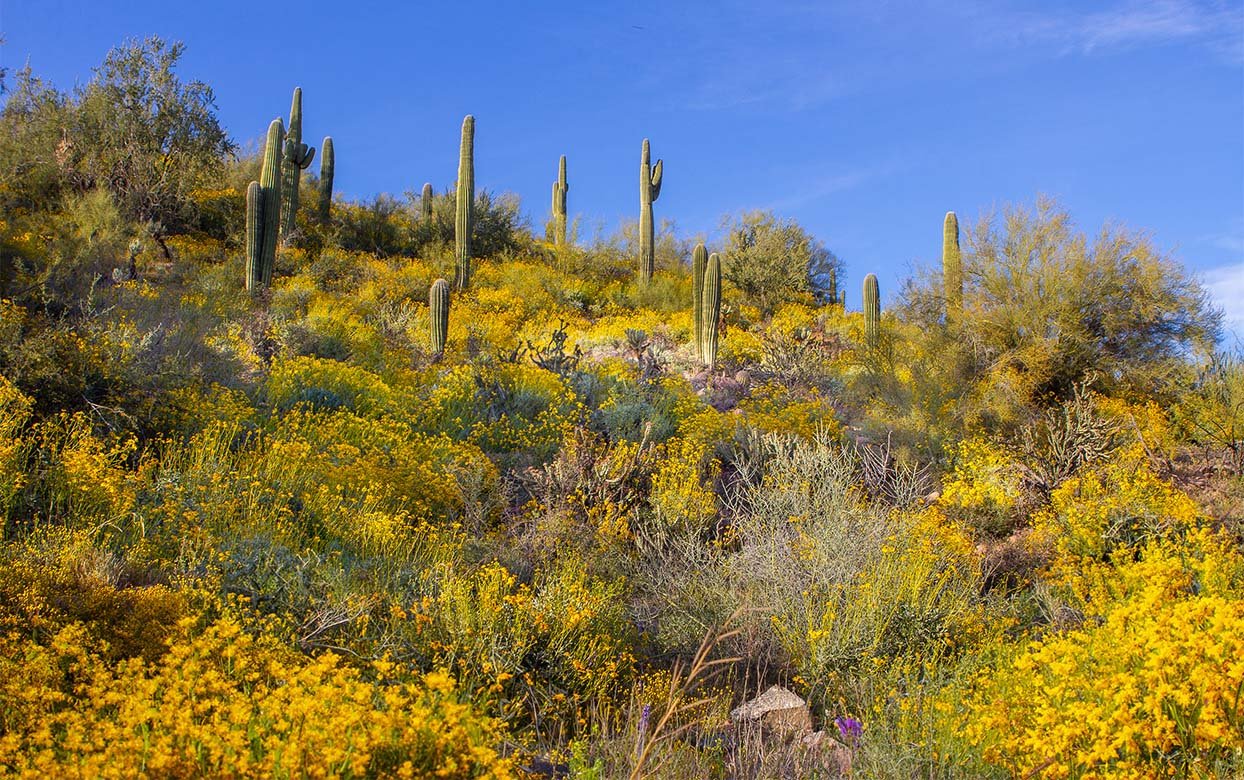
The desert asks a lot of every plant: full sun, brutal summer heat, low humidity, alkaline soil. But trees don't just survive these conditions — they modify them. A well-placed drought-tolerant shade tree can reduce surface temperatures by 15–20°F, cool the air above your patio through transpiration, and cut cooling bills noticeably over a Phoenix or Tucson summer — making native trees one of the best investments in any xeriscape or low-water garden.
They also anchor the garden visually. Shrubs and groundcovers do the textural work; trees provide the vertical structure and scale that turn a collection of plants into a landscape. Without one, even a beautifully planted yard can feel like a floor without a ceiling.
"A desert garden without a tree is a floor without a ceiling — functional, but missing something essential."
The Best Desert Trees to Plant
Palo Verde (Parkinsonia spp.) — The Desert's Green-Barked Wonder
Palo verde is the unofficial tree of the Sonoran Desert. The name means "green stick" in Spanish, and the trunk and branches stay photosynthetically active even when the plant drops its tiny leaflets during drought — which means it never looks completely bare, even in the hardest dry stretch.
The two most commonly planted species are:
- Blue palo verde (Parkinsonia florida): Reaches 25–30 feet with a spectacular yellow bloom in April–May.
- Foothill palo verde (Parkinsonia microphylla): Smaller and more drought-tolerant, with a bloom that follows a few weeks later.
Both tolerate desert heat without irrigation once established, attract bees and butterflies in bloom, and cast a filtered, dappled shade that's gentler on understory plants than a dense canopy. They're also ideal nurse plants for cacti and wildflowers planted beneath them. Their seed pods fed Indigenous peoples for centuries and still sustain wildlife across the desert Southwest. Plant in full sun with well-draining soil and resist the urge to overwater — excess moisture drives fast, weak growth that breaks in monsoon winds.
Desert Willow (Chilopsis linearis) — Summer's Long Bloomer
Despite the name, desert willow is not a true willow. It's related to catalpa and shares the same long, graceful leaves. What sets it apart is its extraordinary bloom season: trumpet-shaped flowers in pink, lavender, white, or deep magenta appear from May through September, long after most desert trees have finished flowering. Hummingbirds visit the flowers obsessively throughout that stretch.
Desert willow grows 15–25 feet tall with an open, multi-trunked form. It's native to desert washes from the Chihuahuan through the Sonoran, meaning it handles both summer monsoon pulses and extended dry stretches without complaint. One caveat: it goes fully deciduous in winter, leaving an elegant bare-branched silhouette. If you want year-round green, pair it with an evergreen companion like a native shrub or an ironwood nearby.
Velvet Mesquite (Prosopis velutina) — The Workhorse with Elegance
Mesquite has a complicated reputation — it can spread aggressively in overgrazed rangeland — but in a cultivated garden it's one of the most valuable trees in the Southwest. The canopy is feathery and fine-textured, casting light shade that's ideal over a desert patio. Yellow catkin flowers in spring draw bees by the hundreds, and the seed pods feed quail, javelinas, doves, and dozens of other species through summer and fall.
Velvet mesquite (Prosopis velutina) is the Sonoran native. In the Chihuahuan Desert, honey mesquite (Prosopis glandulosa) fills the same role. Both grow deep taproots that locate water at remarkable depths, and established trees need little or no supplemental irrigation across most desert climates. They do drop seed pods prolifically — decide where you want them and plan for cleanup, or embrace the wildlife the pods attract. To keep the canopy tidy in early spring before bloom, a quality pair of bypass pruning shears makes light work of crossing branches and deadwood.
Desert Museum Palo Verde — Best of Both Worlds
This is not a species but a sterile hybrid (Parkinsonia 'Desert Museum'), developed at the Arizona-Sonora Desert Museum. It combines the vigor of blue palo verde, the cold hardiness of foothill palo verde, and the thornlessness of the Sonoran palo verde into a single, highly garden-worthy package.
The key advantages:
- No thorns — important if you have children, pets, or a narrow pathway nearby
- No seed pods — eliminates mess and eliminates unwanted seedlings
- Extended bloom season — yellow flowers often appear in multiple flushes from spring into early summer
- Fast-growing and rounded — reaches its mature form quickly without looking leggy
Desert Museum Palo Verde is the single most-planted shade tree in Phoenix, Tucson, Las Vegas, and El Paso — and that popularity is well-earned. If you only plant one tree in your desert garden, this is the one to choose.
Ironwood (Olneya tesota) — The Ancient and the Permanent
Ironwood is the heavyweight of the Sonoran Desert — literally. Its wood is the densest of any North American tree. Individual specimens can live 800 years or more, and they show it: gnarled silver-gray bark, a massive canopy that can spread 40 feet wide, and a quality of presence that feels genuinely timeless.
In May, ironwood covers itself in purple-pink flowers that rival any ornamental tree in color. Birds nest in its deep canopy. Saguaros germinate in its shade — it serves as a nurse plant for the entire desert ecosystem beneath it. Once an ironwood is established, it becomes the most ecologically productive thing in your yard. Scientists have documented over 500 animal species that use ironwood at some point in their life cycle, making it a true keystone species of the Sonoran Desert.
The catch: ironwood grows slowly. It's a long-term commitment, the kind of tree you plant knowing future generations will appreciate it most. It's also cold-sensitive — the Sonoran Desert is its native range. In Phoenix and Tucson it's reliable; at higher elevations or in the Mojave, give it a protected southern exposure.
Blue Palo Brea (Cercidium praecox) — A Touch of the Sonoran
Also called palo brea or simply brea, this Mexican native has found a comfortable home in cultivated Sonoran gardens. Its distinguishing feature is a smooth, lime-green trunk even more vivid than blue palo verde — almost iridescent in morning light. The arching, umbrella-like crown provides excellent filtered shade for a patio or courtyard.
Its yellow flowers appear in early spring before the leaves fully emerge, briefly covering the entire canopy in gold. It's fast-growing, largely thornless, and tolerates the humidity spikes that come with the monsoon season better than some of the native Parkinsonia species.
Choosing the Right Tree for Your Space
Patio and Courtyard Trees
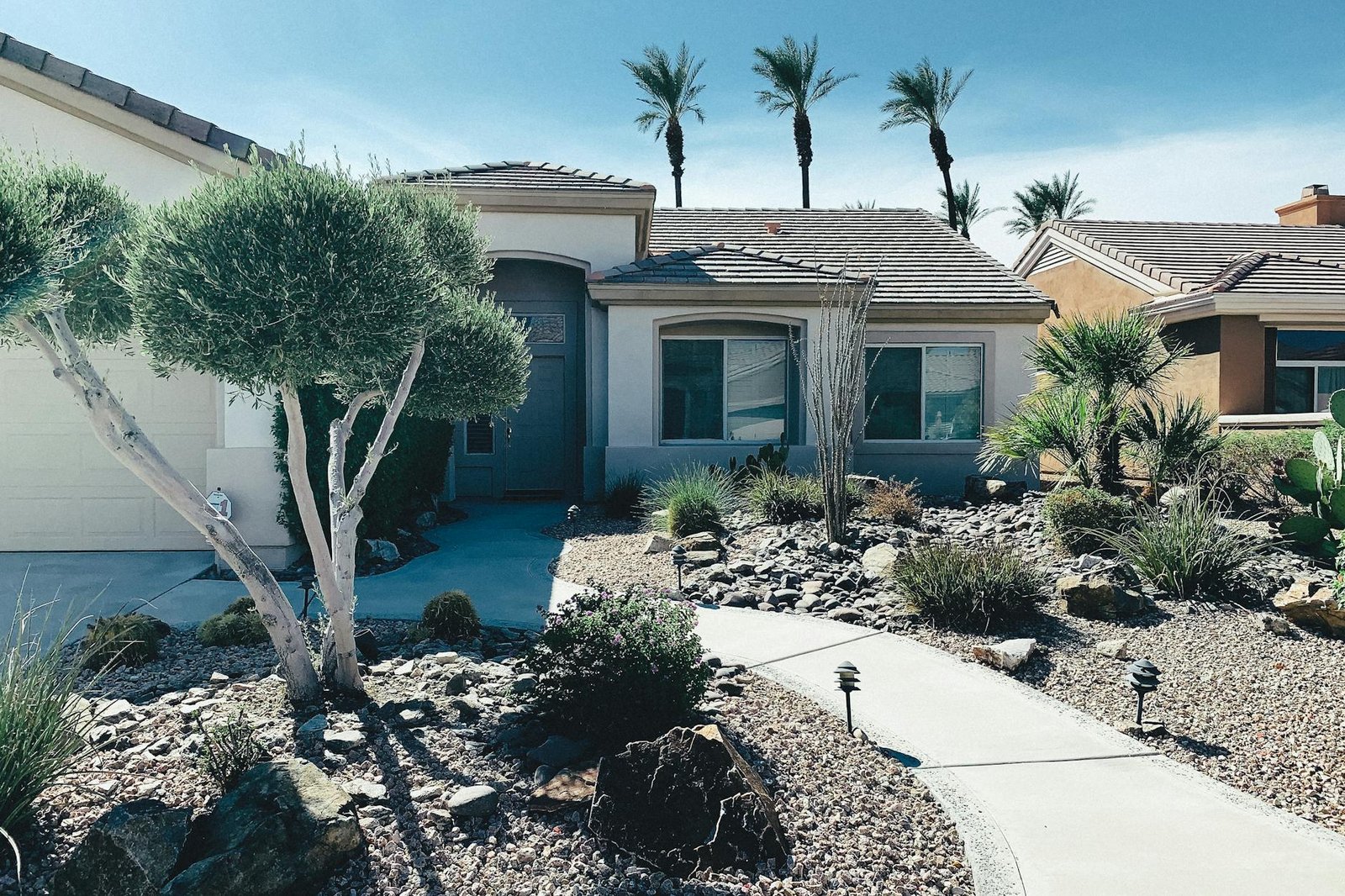
For filtered shade over a seating area with minimal root disruption to pavement, Desert Museum Palo Verde or Desert Willow are ideal — open canopies, manageable mature size, and multi-season visual interest. Both stay under 25 feet.
Large Property Anchors
If you have the space, Ironwood or Velvet Mesquite will become the defining element of your landscape over time. Give them room: 20–30 feet from structures and other trees. Their canopies are worth protecting.
Fast Color
Desert Willow blooms the longest (May through September); Blue Palo Verde delivers the most dramatic spring display. Planted together, they give you sequential bloom from April all the way through the monsoon season.
Planting and Care Basics
Most desert trees want the same things:
- Full sun — no exceptions, no partial-shade compromises
- Well-draining soil — decomposed granite, native caliche-free soil, or amended mixes; never clay-heavy
- Deep, infrequent water during the first two years to establish roots; little to none after that
- Minimal fertilizer — high nitrogen pushes fast, brittle growth that breaks in wind
Water new trees deeply every 7–10 days for the first two summers — the same deep-and-infrequent approach that works for cacti and succulents. The most common mistake is planting too deep. The root flare — where the trunk meets the root system — should be at or slightly above soil level. Even a few inches too deep causes slow, invisible decline that shows up years later. Plant high, then mulch out to the drip line. If your soil has compacted caliche layers, a sturdy transplanting spade helps you break through hardpan without damaging the root ball.
Stake only if necessary, and remove stakes after the first growing season. Trees that flex in wind develop stronger root systems and trunk wood. A staked tree that never moves becomes dependent on that support and develops poorly. For watering new transplants through their first summer, a slow-release tree watering bag delivers deep moisture without runoff — especially useful in caliche-heavy soils where water tends to sheet rather than soak in.
Start with One Good Tree
You don't need to design an entire landscape to begin. Plant one good tree in the right spot, water it through its first two summers, and watch what happens to the ground beneath it. The soil cools, other plants establish more easily, and the garden begins to feel like a place rather than a yard.
For everything that follows — groundcovers, shrubs, perennials, seasonal color — read our Beginner's Guide to Starting Your Desert Garden From Scratch and The Best Time of Year to Plant in the Desert for a seasonal calendar that tells you exactly when to put each piece in the ground.
This post contains affiliate links. We may earn a small commission if you purchase through them, at no extra cost to you.