Cacti and succulents need deep, infrequent watering — not a little every day. Water thoroughly until it drains from the bottom, then let the soil dry completely before watering again. In the low desert, established in-ground cacti need watering every 10–14 days in summer and once a month or less in winter. Container plants dry out twice as fast — check more frequently but water just as deeply.
The single most common cause of cactus death isn't drought — it's a well-meaning gardener with a watering can.
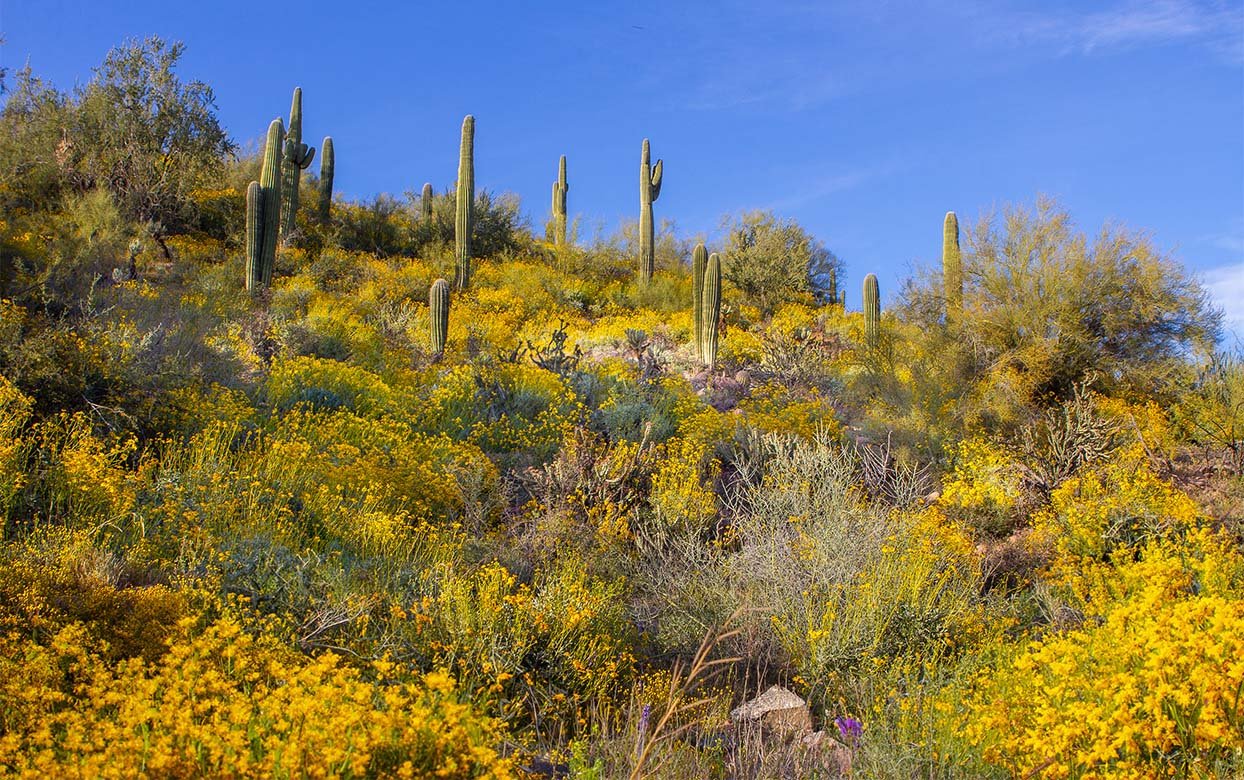
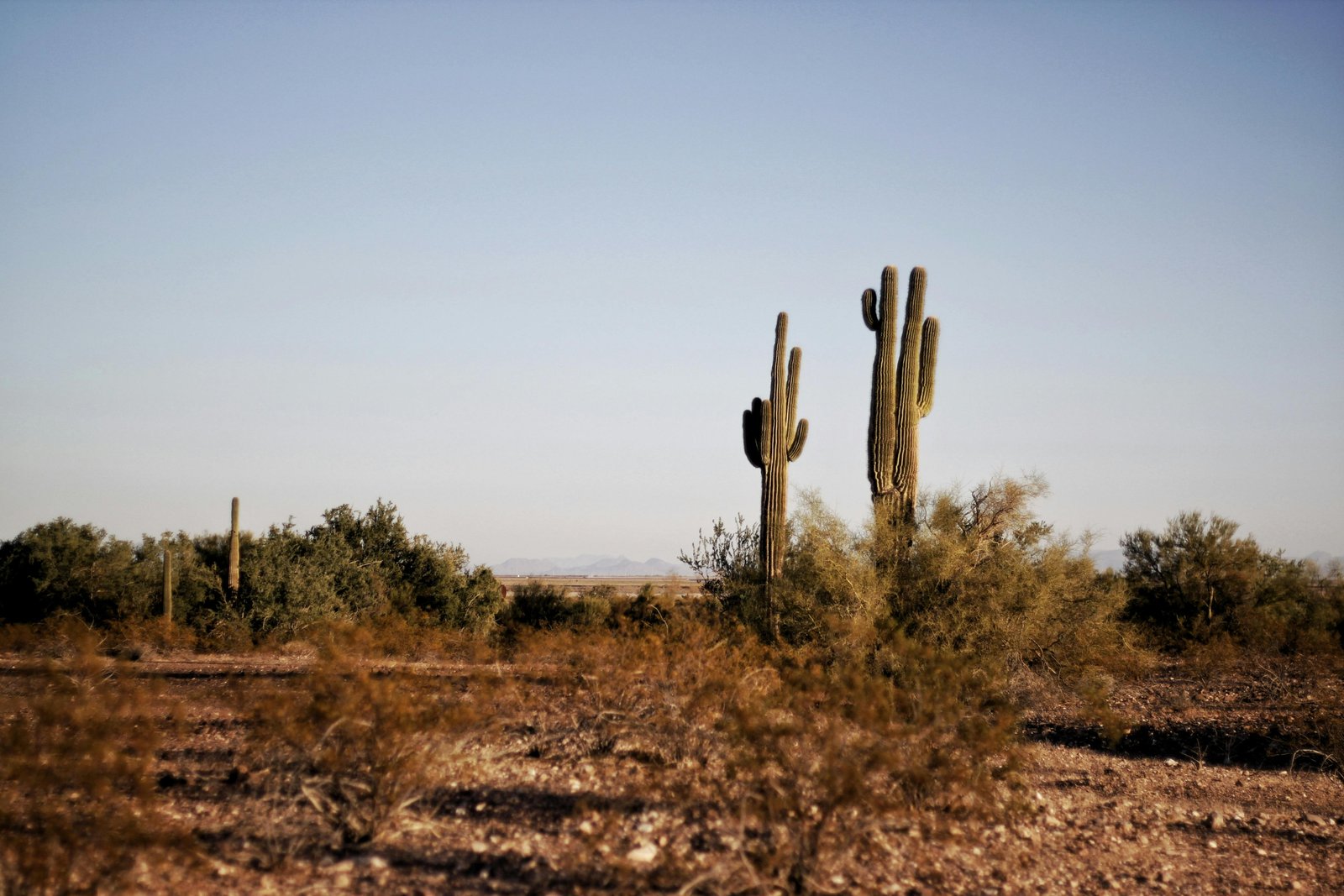
In the Sonoran, Mojave, and Chihuahuan deserts, cacti and succulents have spent millions of years evolving for feast-and-famine cycles. A summer monsoon drops an inch of rain in twenty minutes; then nothing for weeks. Their root systems, tissues, and metabolisms are tuned to that rhythm. When we give them a little water every day, we're not being kind — we're slowly drowning them.
This guide will help you understand how these plants actually drink, when they need water, and how to deliver it in a way that matches the desert's own logic.
How Cacti and Succulents Actually Store Water
Most cacti — saguaro (Carnegiea gigantea), barrel cactus (Ferocactus spp.), prickly pear (Opuntia spp.) — store water in their thick, accordion-pleated stems. Those pleats expand after a good rain and contract during drought, which is one of the easiest ways to read a plant's hydration level at a glance. Succulents like agave (Agave spp.), aloe (Aloe vera), and echeveria store water in fleshy leaves instead.
Both types share a similar root strategy: a wide network of shallow fibrous roots designed to capture surface moisture quickly, and in older specimens, deeper taproots that anchor against flash floods. When you water, you want to reach all of those roots — not just the top inch of soil.
The Number-One Mistake: Overwatering
Root rot is the silent killer of desert plants. It doesn't announce itself immediately. A cactus can look healthy for weeks while its roots are rotting below the soil line — by the time you notice the softening stem or yellowing pads, the damage is often irreversible.
Root rot is almost always caused by one of three things:
- Watering too frequently, not allowing the soil to fully dry between waterings
- Poor drainage, where water pools in the root zone
- Cold and wet combined, especially in winter when the plant is dormant and cannot process moisture efficiently
Warning signs of an overwatered cactus: yellowing or browning at the base, soft or mushy stem tissue, a foul smell from the soil, and visible mold on the soil surface. If you catch it early, remove the plant, trim any rotted roots back to firm tissue, let the root system dry for a few days, and replant in fresh dry soil with improved drainage.
Desert plants don't fear drought — they fear wet feet in cold soil.
How to Know When to Water
The Finger (or Skewer) Test
Stick your finger two inches into the soil near the base of the plant. If you feel any moisture, wait. If the soil is bone dry, it's time. For potted plants, a wooden skewer works even better — insert it to the drainage hole, pull it out, and check for moisture clinging to the wood. Clean wood means dry soil.
Reading the Plant
Healthy cacti have firm, plump stems. When a saguaro or barrel cactus begins showing pronounced accordion compression — the pleats pulling inward noticeably — it's drawing on stored reserves and would benefit from a deep watering. Succulents signal thirst differently: leaves may look slightly wrinkled or lose their glossy sheen before the shriveling becomes dramatic.
Don't wait for extreme shriveling, but don't panic at a little. Mild stress between waterings is normal and in some species even encourages stronger root development.
Watering Technique: Deep and Infrequent
When you do water, water deeply. The goal is to saturate the entire root zone — typically 12 to 18 inches down for established plants. A slow, thorough soak is far more effective than a quick daily sprinkle that never reaches the deeper roots at all.
For in-ground desert plants — especially those planted beneath shade trees, where root competition matters — a drip emitter running for 45 to 90 minutes once a week during peak summer heat, or a slow hose placed at the plant's base for the same duration, generally does the job. For potted plants, water until it flows freely from the drainage hole, then stop completely.
Then wait. Let the soil dry fully before you water again.
Seasonal Watering Adjustments
Spring and Summer (Growing Season)
This is when cacti and most succulents are actively growing and at their thirstiest. In the low Sonoran Desert — Phoenix, Tucson, Yuma — summer brings the monsoon season (roughly July through September), during which natural rainfall may reduce or eliminate your need to water entirely. Track the rain gauge, not the calendar.
General guidelines for dry spring and pre-monsoon summer:
- In-ground cacti: every 10–14 days
- In-ground succulents (agave, aloe): every 7–10 days
- Potted plants: every 5–10 days depending on pot size and sun exposure
As a general cactus watering schedule for the low desert: established in-ground cacti need watering every 10–14 days in summer (outside monsoon season), every 3–4 weeks in spring and fall, and once a month or less during winter dormancy. Container plants dry out twice as fast — check weekly in summer. Always let the soil moisture guide the schedule, not the calendar.
Fall
As temperatures drop and growth slows, begin stretching the interval between waterings. By October in most desert zones, established in-ground cacti rarely need supplemental water if monsoon rains have recharged the soil. Let the plant's appearance, not a fixed schedule, guide you.
Winter Dormancy
This is the danger season. Most cacti go into near-dormancy below 50°F (10°C). Their metabolic rate drops, they stop absorbing water efficiently, and wet soil in cold conditions invites root rot almost immediately.
General guidelines for winter:
- Established in-ground cacti: once a month if there has been no rain — or not at all in mild-winter desert regions
- Potted cacti: once every 4–6 weeks, only if the soil is completely dry
- Succulents like aloe: slightly more often — once every 3–4 weeks
Does Water Quality Matter?
In desert cities, tap water often carries high mineral content. Over time, calcium and other salts accumulate in potting soil, forming a white crust on the surface and inhibiting nutrient uptake. If you notice this buildup, flush the pot thoroughly every few months with a large volume of water to push salts through the drainage hole.
Rainwater is ideal for potted plants and worth catching if you can. If you're growing multiple desert plants together, pairing them thoughtfully also reduces overall water demand — see our guide to desert companion planting for which combinations work best. If you already have a catchment barrel or collection system, route that water to your containers first — they benefit most from the lower mineral load.
Container Plants vs. In-Ground Plants
Container plants dry out faster than in-ground plants — often twice as fast on a hot summer afternoon — because pots absorb radiant heat and airflow surrounds the root zone on all sides. Terracotta dries faster than plastic or glazed ceramic. This isn't necessarily a problem; it means you need to check soil moisture more frequently, not that you should water more aggressively.
Established in-ground plants, by contrast, have access to deeper soil reserves and the thermal stability of the earth around them. A three-year-old prickly pear (Opuntia engelmannii) planted in native desert soil may need almost no supplemental water at all once the monsoon season arrives.
Why Drainage Solves Almost Everything
No watering schedule in the world will save a plant sitting in poorly drained soil. Cacti and succulents must have fast-draining, gritty growing medium — a mix of native desert soil or sandy loam with 30–50% coarse perlite or decomposed granite works well. If you're planting in clay-heavy soil (common in parts of the Chihuahuan Desert and low valleys), amend heavily or build a raised mound to keep roots above the waterlogged zone.
For potted plants, never use standard potting mix alone — it retains too much moisture. Cut it with perlite or a purpose-blended cactus mix, and make sure drainage holes are completely clear before you plant. A layer of gravel at the bottom of the pot is a common myth and actually impedes drainage; skip it.
Get the drainage right, time your waterings to the season, and water deeply when you do — and your cacti and succulents will reward you with decades of resilient, low-maintenance beauty.
If you're building your first desert garden from the ground up and want to understand the bigger picture — from soil preparation to plant selection — start with our beginner's guide to creating your desert garden. And if you're unsure when to put plants in the ground in the first place, our desert planting calendar will help you find the right window for your region.