Growing your desert plant collection doesn't require a trip to the nursery — or the expense that comes with one. Succulents and cacti are among the easiest plants to multiply at home, and in the Sonoran and Chihuahuan deserts, the dry climate actually works in your favor. Low humidity reduces the risk of rot during the critical callusing phase, and warm temperatures accelerate root formation during the shoulder seasons.
Whether you're expanding a collection of echeveria on a sunny patio, filling bare patches with native prickly pear (Opuntia spp.), or creating gifts from a prize aloe, propagation is a skill every desert gardener should have. If you're just getting started with desert plants in general, our beginner's desert garden guide covers the tools, soil, and plant selection basics you'll need first.
Why Desert Plants Are Built for Propagation
Succulents and cacti evolved in environments where surviving a drought, a flash flood, or being knocked over by a javelina is just another Tuesday. They store water and energy in leaves, stems, and roots — and that stored energy is exactly what fuels new root growth during propagation. A detached leaf from a ghost plant (Graptopetalum paraguayense) or a stem cutting from a cholla (Cylindropuntia spp.) isn't a dying plant fragment. It's a plant in pause mode, ready to establish when conditions are right.
The Four Methods: Offsets, Leaf Cuttings, Stem Cuttings, and Seeds
Offsets (Pups)
Most agaves, aloes, many cacti, and clustered succulents like hens-and-chicks (Sempervivum tectorum) produce offsets — small genetic clones that grow at the base of the mother plant. These are the easiest propagation method because the pup is already partially developed.
Wait until the offset is at least one-third the size of the parent. Use clean, sharp bypass pruners to sever it as close to the mother plant as possible, retaining any roots. If there are no roots yet, let the cut end dry in the shade for two to five days before planting. Set it into a dry, well-draining mix and wait a full week before offering any water.
Agave pups removed in early spring — before the brutal summer heat arrives — establish quickly and often catch up to nursery-grown plants within a single season. The same timing applies to separating offshoots from clumping barrel cacti like Ferocactus wislizeni.
"The biggest mistake people make with offsets is being impatient. Let the cut callus. Let the roots establish. Water later than you think you need to." — a principle repeated by every experienced desert propagator.
Leaf Cuttings
This method works exclusively with fleshy-leaved succulents — echeveria, sedum (Sedum spp.), ghost plant, and crassula (Crassula spp.). It does not work with cacti.
Grasp a lower leaf close to the stem and twist gently from side to side while pulling straight away from the plant. You need a clean break — the entire leaf base must come away intact. Incomplete leaves rarely root. Lay the leaves on dry soil in bright, indirect light. Within one to three weeks, small pink roots emerge from the base, followed by a tiny rosette. Mist lightly once roots appear, but resist the urge to soak. The mother leaf fuels the new plant until the rosette develops roots of its own, then gradually withers away.
Stem Cuttings
This is the go-to method for columnar cacti like Peruvian apple cactus (Cereus repandus), golden barrel cactus (Echinocactus grusonii), euphorbias, aeoniums, and most branching succulents. If you have an overgrown jade plant or a leggy cereus stretching toward a window, stem cuttings let you trim the parent and start new plants at the same time.
Use a clean knife or sharp pruners to make a straight cut. Let the cutting rest in a shaded, dry spot — on a shelf, a table, or in a clean pot without soil — until the cut end forms a dry callus. This takes two days for a thin succulent stem and up to two weeks for a large cactus pad. Planting before callusing is complete is the number-one cause of propagation failure, because exposed tissue rots immediately in moist soil.
Once callused, set the cutting into a pot of coarse propagation mix — fifty percent perlite and fifty percent cactus soil works well. Don't water for the first week. Then water once and let the pot dry completely before watering again. The deep-and-dry approach that applies to established desert plants applies here too; you can read more about it in our guide to watering cacti and succulents without killing them.
For larger cactus pads or thick segments, applying a small amount of rooting hormone powder to the callused end before planting can speed up root formation by several weeks.
Growing from Seed
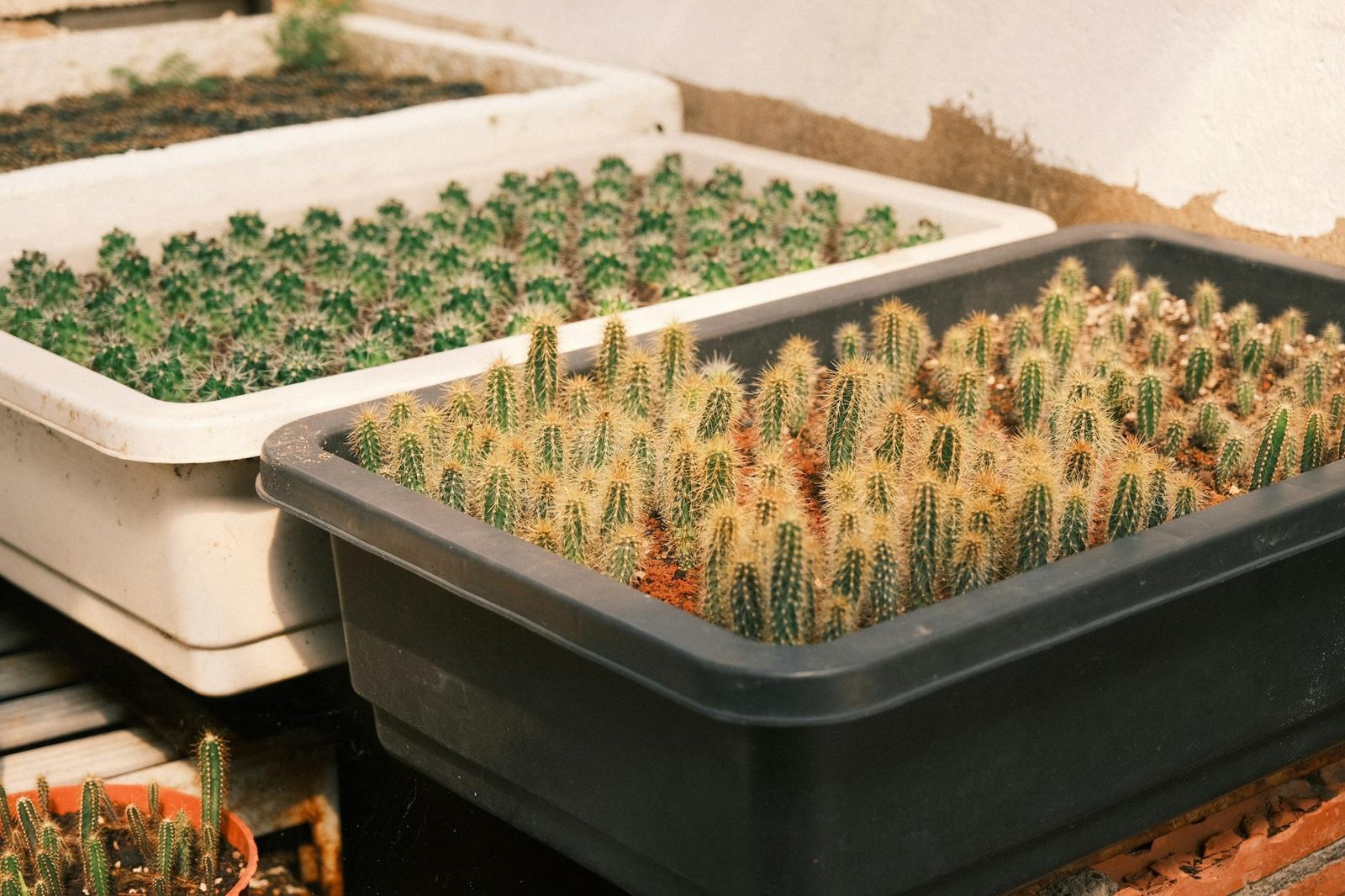
Seed propagation is the slowest method — most desert plants take two to four weeks to germinate and months to reach transplant size — but it's the only way to grow species that don't produce offsets, and the best way to raise large quantities cheaply. Saguaro (Carnegiea gigantea), Sonoran barrel cactus (Ferocactus wislizeni), and most native Chihuahuan and Mojave species start beautifully from seed.
Sow seeds in shallow trays of fine cactus mix, press them just below the surface, and cover with a thin layer of coarse sand. Keep the tray moist but not wet for the first several weeks — this is the one phase where you water more frequently. A humidity dome or plastic wrap over the tray maintains consistent moisture during germination. Once seedlings reach a centimeter tall, begin transitioning to the dry-and-water cycle that suits established desert plants.
When to Propagate in the Desert
Timing matters as much as technique. The ideal propagation window in the Sonoran Desert is late February through April and again from September through October. These shoulder seasons provide warmth without extreme heat — roots develop best between 65°F and 85°F soil temperature. Propagating in July or August invites rot and fungal issues from monsoon humidity, even indoors.
In the Mojave, the spring window closes earlier — aim for February through March — because summer arrives fast and hard. In the higher-elevation Chihuahuan Desert, the fall window extends a bit longer, often into early November, before soil temperatures drop below the rooting threshold. Understanding your specific desert's seasonal rhythm is crucial; our post on the best time of year to plant in the desert covers that calendar in detail, and the same logic applies directly to propagation.
The Soil and Container That Make or Break Success
No matter the method, drainage is non-negotiable. Native desert soils drain fast, hold little water, and are often rocky and low in organic matter. Standard potting soil retains far too much moisture and causes rot in new propagules. Mix two parts coarse perlite with one part cactus potting mix, or add crushed granite fines for an even more authentic substrate. Avoid anything labeled "moisture-retaining."
| Method | Best Species | Callus Time | Root Time |
|---|---|---|---|
| Offsets | Agave, aloe, hens-and-chicks | 2–5 days | 2–4 weeks |
| Leaf cuttings | Echeveria, sedum, graptopetalum | 3–5 days | 1–3 weeks |
| Stem cuttings | Cereus, golden barrel, jade | 3–14 days | 3–6 weeks |
| Seed | Saguaro, barrel cactus, prickly pear | N/A | 2–4 weeks to germinate |
Use small terracotta or unglazed clay pots whenever possible. Clay wicks excess moisture from the sides, keeping the rooting zone drier and reducing rot risk significantly. Plastic pots retain moisture longer — fine for an established plant, but a liability for a newly rooted cutting in a humid spell.
Once your propagated plants are rooted and growing, the next question is where they'll go in the garden. If you want to think through plant placement and which species support one another, our guide to desert companion planting shows how propagated prickly pear, agave, and native shrubs can work together as a designed community — saving water and looking intentional in the process.
This post contains affiliate links. We may earn a small commission if you purchase through them, at no extra cost to you.