The desert has a reputation for heat — scorching summers, triple-digit afternoons, soil that cracks in July. But every desert gardener eventually confronts a harder truth: the cold comes fast, drops low, and doesn't warn you. A hard freeze in Tucson, a sharp December night in El Paso, an unexpected cold snap in Palm Springs — these events can kill frost-sensitive plants in a single night if you're unprepared.
The good news is that protecting your desert garden from frost is largely a matter of timing, materials, and knowing which plants need help. Once you understand the risk landscape, the actual work is simple. Here's everything you need to know.
Understanding Frost in Desert Climates
Desert frost is different from frost in wetter climates. Because arid air holds little moisture, nights cool dramatically and quickly after sunset — often dropping 30°F to 40°F from the afternoon high. A 75°F afternoon can become a 28°F night. That temperature swing is normal in the Sonoran and Chihuahuan deserts from late November through early March.
The Sonoran Desert (Phoenix, Tucson, Yuma) sits in USDA Hardiness Zones 9a through 10b. Phoenix averages fewer than five freezing nights per year; Tucson sees 20 or more. The Chihuahuan Desert (El Paso, Las Cruces, parts of New Mexico) drops into Zone 7b in many areas, where lows can reach 5°F to 10°F in a hard year. The Mojave (Las Vegas, Barstow) occupies Zones 8b to 10a, with cold nights common from November through February.
"Radiation frost" — the type most common in the desert — occurs on clear, calm nights when heat radiates from the ground into a cloudless sky. A forecast of 36°F can still produce surface frost if the air is dry and the sky is clear. Always watch the dew point, not just the temperature.
Knowing your specific microclimate matters enormously. Low spots in the yard collect cold air as it drains downhill — a phenomenon called cold pooling. A hollow five degrees colder than the rest of your yard can mean the difference between a damaged plant and a dead one. If you've seen frost in one corner but not another, take note: that's a permanent feature of your landscape.
Which Desert Plants Need Frost Protection?
Not all desert plants are equally vulnerable. Understanding the categories helps you prioritize where to focus your effort.
High-Risk Plants (protect below 32°F)
- Bougainvillea — a Sonoran garden staple that suffers leaf and branch damage at 32°F and dies to the ground below 28°F
- Tropical sage (Salvia coccinea) — frost-killed to the roots below 30°F, though it often returns from roots in spring
- Desert rose (Adenium obesum) — the caudex (water-storing trunk) rots if frozen; move containers indoors below 40°F
- Lantana (Lantana camara) — tops killed by frost, but established plants resprout from roots in Zone 9+
- Ruellia brittoniana (Mexican petunia) — dies back below 28°F but regrows vigorously
- Young citrus, especially lime and lemon — more on these below
Moderate-Risk Plants (protect below 25°F)
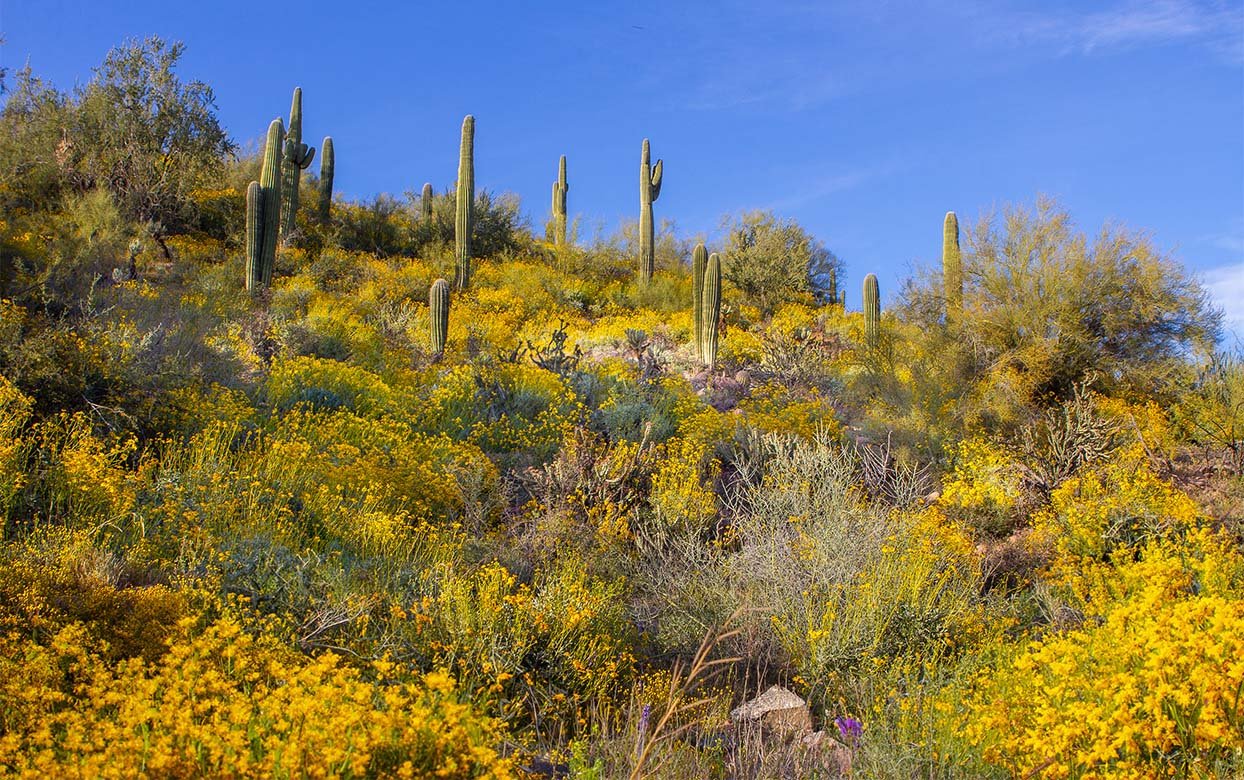
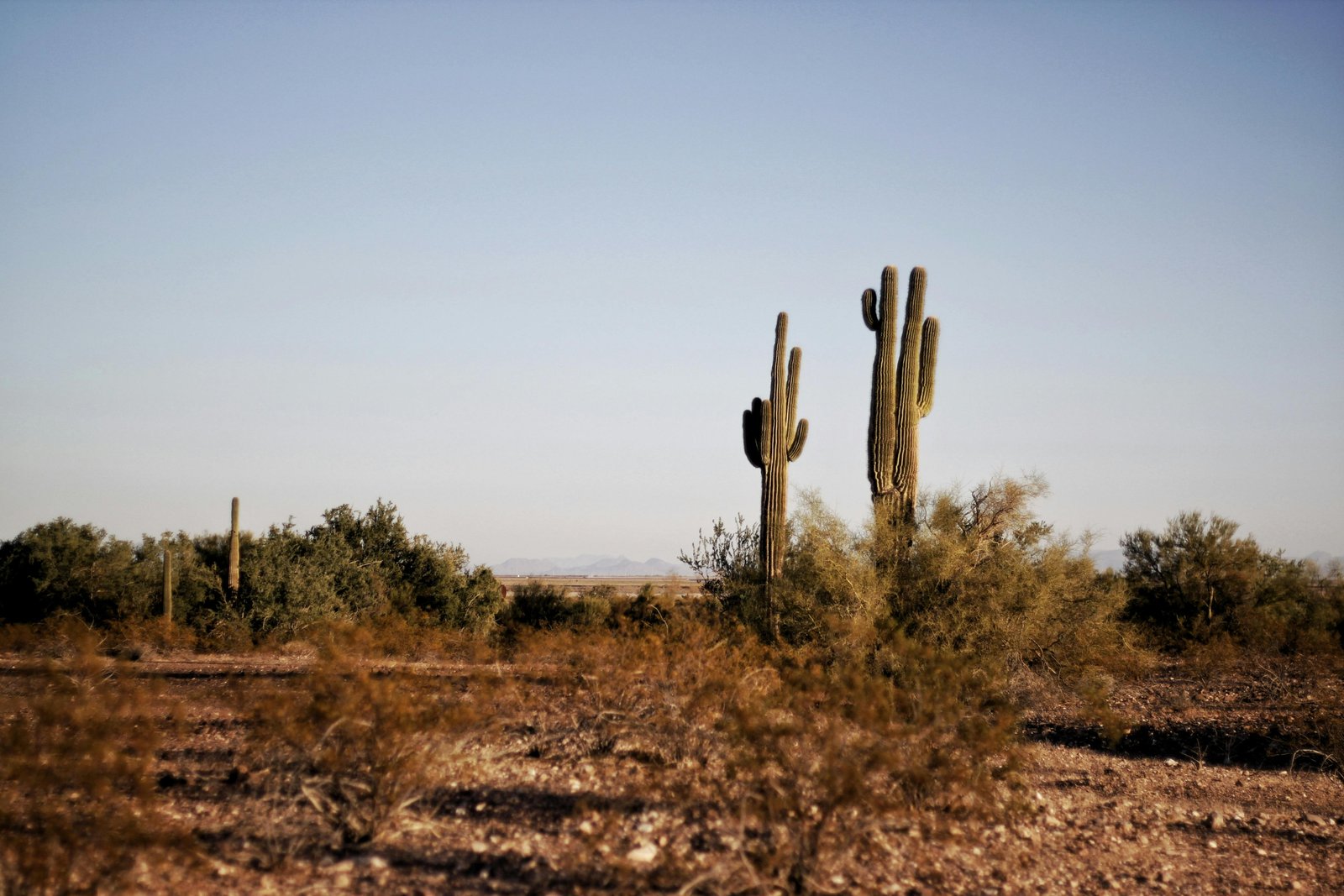
- Saguaro (Carnegiea gigantea) — fully established adult saguaros handle brief dips to 20°F; seedlings and juveniles under four feet need protection
- Brittlebush (Encelia farinosa) — damaged below 25°F but recovers quickly
- Ocotillo (Fouquieria splendens) — hardy to about 10°F when established; newly transplanted specimens need a frost cloth their first two winters
- Palo verde (Parkinsonia spp.) — established trees are fully cold-hardy; containerized or newly planted specimens may lose branches below 20°F
- Nopales and prickly pear (Opuntia spp.) — most species are frost-tough but young pads can freeze and rot
Cold-Hardy Plants (rarely need protection)
- Agave (Agave spp.) — species vary widely. Weber agave (Agave weberi) handles 15°F; century plant (Agave americana) is hardy to 10°F. Check the specific species.
- Barrel cactus (Ferocactus cylindraceus) — handles 10°F when dry
- Mesquite (Prosopis spp.) — fully cold-hardy in all Sonoran and Chihuahuan desert zones
- Desert willow (Chilopsis linearis) — drops leaves but regrows in spring; hardy to 0°F
If you're still putting your garden together and considering which trees to plant for shade, keep cold hardiness in mind from the start. Species like palo verde and desert willow are essentially frost-proof once established, making them much lower maintenance than tropical imports.
When to Take Action: Reading the Forecast
The window for frost preparation is short — cover plants the evening before a predicted freeze, not the morning of. By the time you see frost on the ground, damage has already occurred. Set a weather alert on your phone for temperatures below 35°F and get into the habit of checking forecasts on the first of November each year.
In the Sonoran Desert, the riskiest window runs from mid-December through mid-February. In the Chihuahuan Desert, extend that from late November through early March. The Mojave desert's higher elevations — around Las Vegas — can see cold nights as early as October.
Planting timing matters here too: if you plant frost-sensitive species in September and October, they'll have a few months to establish root systems before the cold arrives. Plants installed in November are far more vulnerable their first winter.
Frost Protection Methods That Work
Frost Cloth and Row Cover
The single most effective frost protection for most desert plants is a quality frost cloth or row cover. These lightweight, breathable fabrics trap ground heat around the plant while allowing air and some moisture to pass through. A 1.5-oz fabric provides about 4°F of protection; a 2-oz fabric gives you 6°F to 8°F. For a night dropping to 26°F in Tucson, a 2-oz cloth over bougainvillea is usually enough.
Drape frost cloth over the plant and anchor the edges to the ground. Do not wrap it tightly around the stem or drape it so that it lifts off the ground — the protection comes from trapping warm air that radiates from the soil, not from the fabric itself being warm. Remove the cloth the next morning once temperatures climb above freezing, or you'll cook the plant in the afternoon heat.
Old Sheets and Blankets
A cotton sheet draped over a small shrub on a cold night provides surprising protection. The same rules apply — anchor the edges and remove it in the morning. Avoid plastic sheeting, which provides no insulation and causes plants to overheat the next day if left in place.
String Lights
Old incandescent string lights (not LED — LEDs produce almost no heat) draped inside a plant wrapped with frost cloth generate enough warmth to push temperatures up 5°F to 8°F. This technique works especially well for citrus trees in Zone 9a, where a hard freeze might push below what frost cloth alone can handle. A strand of incandescent outdoor lights coiled inside the canopy of a young orange tree can save it on a 22°F night.
Moving Containers Indoors
If you grow frost-sensitive plants in containers — desert roses (Adenium obesum), potted bougainvillea, tender euphorbias — the simplest solution is to move them into a garage or shed when temperatures threaten to drop below 40°F. Even an unheated garage stays 10°F to 15°F warmer than the outside air on most cold nights. A covered patio facing south also provides meaningful protection.
This is one reason why container gardening is so popular in the desert — managing cacti and succulents in containers means you can simply bring them inside for the three to four cold weeks most desert climates actually experience each year.
Mulch Around the Root Zone
A 3- to 4-inch layer of organic mulch around the base of frost-sensitive plants insulates the root zone and dramatically slows soil heat loss overnight. This doesn't protect the above-ground portion of the plant, but it does protect the roots — which is what allows plants like lantana and ruellia to resprout in spring even after the tops are killed. Apply mulch before cold season, not in the middle of a freeze event.
Protecting Citrus: A Special Case
Citrus is the queen of the low-desert garden and also the crop most often damaged by frost. Lemons and limes are the most tender, damaged by temperatures below 29°F. Oranges and grapefruits can handle a night or two at 26°F to 28°F if they're dry and established. Mandarins and tangelos fall somewhere in between.
For young citrus trees under three years old, invest in a trunk wrap to protect the graft union (the bulge low on the main trunk). Even if the canopy is damaged or killed, a tree whose graft union survives can regrow from the rootstock. Wrap the trunk from the soil line up to the first major branch fork with foam pipe insulation or commercial tree wrap before winter arrives.
For established citrus, the goal is to protect the canopy. A frost cloth draped from the canopy to the ground (not leaving gaps) traps soil heat around the whole tree. Water the tree well two to three days before a hard freeze — moist soil holds and radiates more heat than dry soil, providing passive protection throughout the night.
After a Frost: What to Do
Frost damage looks worse than it often is. Mushy, translucent, or blackened leaves signal cellular damage, but the roots and woody structure may be perfectly intact. Resist the urge to prune immediately — wait until late February or early March, when the danger of further frost has passed. Cutting damaged tissue too early stimulates new growth that is immediately vulnerable to the next cold snap.
For cacti that show mushy spots after a freeze, allow the damaged tissue to dry and callus before cutting. If you cut a mushy saguaro pad immediately, the wound stays wet, and rot spreads. Give it two to three weeks of dry weather, then remove only tissue that is clearly dead and dry. Succulents that have turned completely to mush cannot be saved, but the roots are sometimes alive — remove the dead top growth, keep the soil dry, and wait for signs of regrowth.
For advice on building a frost-resilient plant community from scratch, our beginner's guide to starting a desert garden covers plant selection, soil preparation, and layout strategies that naturally reduce frost exposure through smart microclimates. And if you want to understand when to plant in the desert to give frost-sensitive species the best start, our seasonal planting calendar lays it out month by month.
This post contains affiliate links. We may earn a small commission if you purchase through them, at no extra cost to you.