You dig your first planting hole in a new Tucson or Phoenix yard, and about eight inches down your shovel stops cold. The ground has gone from sandy grit to something resembling concrete. That white, chalky layer is caliche — and if you ignore it, your plants will suffer for it. Caliche is one of the most common and most misunderstood soil challenges in desert gardening, but with the right approach it doesn't have to stop you.
What Is Caliche and Why Does It Form?
Caliche (pronounced kuh-LEE-chee) is a hardpan layer of calcium carbonate (CaCO₃) that accumulates in the subsoil of arid and semi-arid regions. In the Sonoran Desert — from Phoenix and Tucson down into Sonora, Mexico — it's nearly universal. The Chihuahuan Desert (El Paso, Las Cruces, Albuquerque) and parts of the Mojave also deal with it regularly.
It forms when calcium dissolved in rainfall or irrigation water moves downward through the soil, then evaporates before reaching the water table. Over centuries, the calcium precipitates out as carbonate and cements soil particles together. The result can range from a soft, powdery layer to petrolic caliche — a slab so dense it reads like bedrock on a soil survey.
Caliche layers can appear anywhere from 2 inches to 3 feet below the surface, though 8–18 inches is most common in established desert neighborhoods. The depth often depends on historic rainfall patterns: wetter areas push it deeper, drier areas keep it closer to the surface.
How to Identify Caliche in Your Yard
Caliche announces itself in several ways before you ever pick up a shovel:
- Standing water after rain or irrigation — water perches above the impermeable layer and takes hours or days to absorb
- Chlorotic (yellowing) leaves — roots trapped above caliche can't access deep moisture or nutrients; plants look perpetually stressed
- Stunted growth — even drought-adapted plants fail to thrive when their roots can't expand
- A white or gray crust visible on the sides of excavated soil
Confirm it with a simple percolation test: dig a hole 12 inches deep and 12 inches wide. Fill it with water twice, letting the first fill drain completely. Fill it a third time and time how long it takes to drain. If more than an inch remains after one hour, you almost certainly have a drainage problem — and caliche is the most likely cause in desert soils.
Breaking Through: The Physical Approach
For most planting situations, the most effective solution is to physically break through the caliche layer to create a drainage path. This is sometimes called "punching a chimney" or creating a caliche chimney — a vertical channel that lets water escape the root zone.
For soft to moderately hard caliche, a digging breaker bar or long-handled cold chisel driven repeatedly into the base of your planting hole will fracture the layer. Work the bar in a circular pattern to widen the channel. You're aiming for a hole at least 6–8 inches in diameter punched through to softer subsoil below — this gives roots a path downward and lets excess water drain rather than pool.
For petrolic caliche — the truly rock-hard variety — renting an electric jackhammer or a tile saw with a masonry blade may be necessary. It's heavy work, but a single afternoon breaking through a planting bed pays dividends for the life of every plant you put there. Once you punch through, backfill the chimney loosely with coarse gravel or crushed granite so it doesn't collapse while still allowing drainage.
If you're setting up irrigation lines, a water jetting tool can cut through moderately dense caliche — useful for threading drip emitter stakes into otherwise impenetrable ground.
"Caliche doesn't have to be a death sentence for your desert garden. Saguaro, mesquite, palo verde — the most iconic desert plants alive — all evolved on top of it. The key is giving roots one escape route downward and everything else follows."
Working Around Caliche: No-Dig Solutions
Sometimes breaking through isn't practical — particularly with very thick petrolic caliche, or when establishing a large planting bed on a budget. In those cases, build up instead of down.
Raised Beds and Berms
Add 12–18 inches of well-draining native soil above the caliche layer and your plants will never know the hardpan exists. A galvanized metal raised bed kit works especially well in the desert — it won't rot like wood, and dark metal warms the soil faster in cool-season growing windows. For in-ground berms, mound native caliche-free soil 12–24 inches high and plant into the mound. The extra elevation also improves drainage naturally.
Strategic Plant Placement
Position plants requiring deep drainage in areas where you've broken through the hardpan. Reserve shallow-rooted ground covers — trailing indigo bush (Dalea greggii), desert marigold (Baileya multiradiata), desert zinnia (Zinnia grandiflora) — for spots where caliche is closer to the surface and intervention isn't practical. For more ideas on pairing plants effectively, see our guide on desert companion planting.
Plants That Thrive Despite Caliche
Evolution is the best engineer. Many of the Sonoran Desert's signature plants developed root systems specifically adapted to caliche-rich soils:
| Plant | Botanical Name | Caliche Strategy |
|---|---|---|
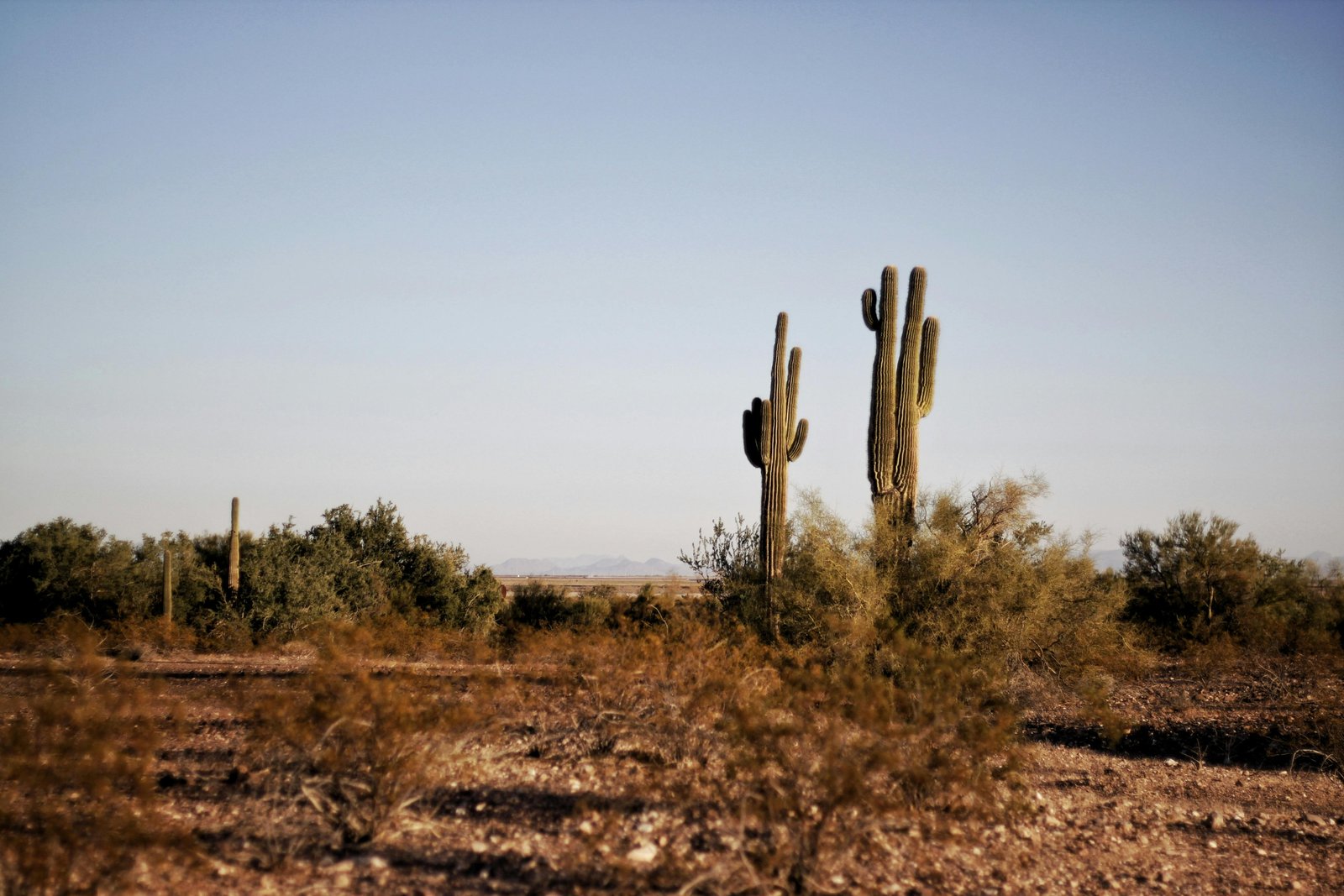
| Saguaro cactus | Carnegiea gigantea | Shallow lateral roots spread wide, never penetrate deeply |
| Velvet mesquite | Prosopis velutina | Taproots fracture through caliche over time; highly persistent |
| Blue palo verde | Parkinsonia florida | Lateral roots spread broadly above hardpan |
| Ocotillo | Fouquieria splendens | Root system adapted to rocky, caliche-heavy slopes |
| Prickly pear | Opuntia spp. | Extremely shallow roots; thrives above any caliche depth |
| Creosote bush | Larrea tridentata | Spreads roots laterally across caliche surface |
| Barrel cactus | Ferocactus spp. | Dense fibrous root mat stays above hardpan |
If you're starting your desert garden from scratch, lean heavily on this list. These species require minimal soil intervention and often perform better in native caliche-bearing desert soil than in heavily amended beds.
Improving the Soil Above the Caliche
You can't neutralize caliche, but you can optimize the soil layer your plants actually use. Caliche-affected soils are highly alkaline — often pH 7.8 to 8.5. Most garden plants prefer 6.5–7.2. A soil pH test kit will confirm how alkaline your soil is, which helps you decide whether amendment is worth it.
For edible gardens or heavy-feeding ornamentals, work sulfur into the top 6–8 inches of soil to gradually lower pH. Elemental sulfur works slowly but lasts; use about 1–2 lbs per 100 square feet in sandy desert soils and retest after 90 days. Adding compost improves soil biology, which helps plants access nutrients even in alkaline conditions — just know that compost alone won't break down caliche.
Irrigation Strategy When Caliche Is Present
Caliche changes everything about how water moves through your soil. Water perches above the hardpan until it slowly seeps sideways — which means overwatering is far more dangerous than underwatering. Read your plants closely and water deeply and infrequently, allowing the upper soil to dry between sessions. Our guide on watering cacti and succulents covers the deep-and-infrequent method in detail — and the same principles apply to any plant growing in caliche-restricted soil.
Drip irrigation concentrated directly over the caliche chimney you've punched through is the gold standard. Position emitters so water is directed into the drainage channel rather than pooling at the caliche surface. Avoid overhead spray that saturates the topsoil evenly — in caliche soils, that approach almost guarantees waterlogged roots during wet seasons.
When to Just Accept the Caliche
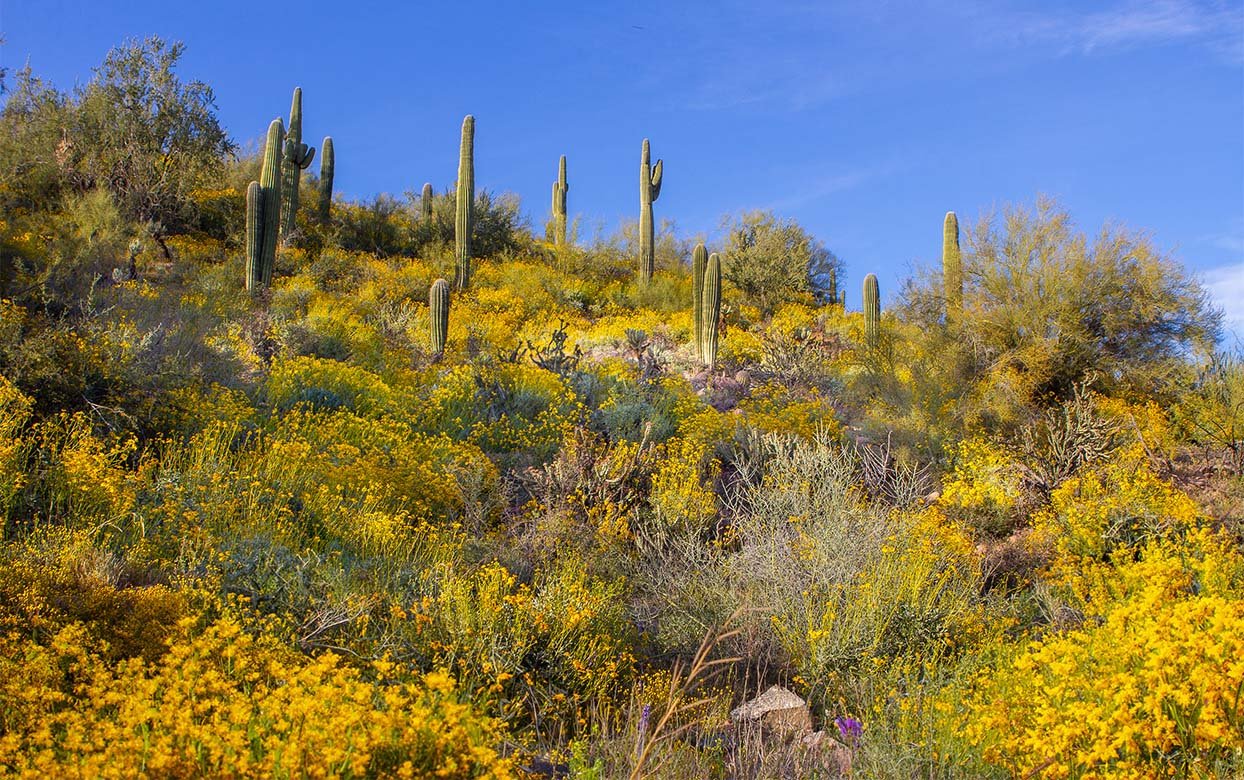
Not every caliche layer needs to be fought. If your soil has a thin powdery layer at 18–24 inches, and you're planting native shrubs or cacti with shallow root systems, you may not need to do anything at all. The desert's most spectacular plant communities — saguaro forests, creosote flats, palo verde groves — grew up on caliche-rich soil without any human intervention. Plant the right plants and the "problem" disappears.
Understanding your specific caliche situation — depth, density, extent — is the first step. Once you know what you're working with, you can decide whether to punch through, build up, or simply plant species that evolved to thrive in exactly these conditions.
Ready to dig deeper? Start with our beginner's guide to starting a desert garden for a complete foundation on desert soil types, tools, and plant selection. And if you're planning an irrigation system to work around your caliche layer, our guide on watering cacti and succulents without overwatering them will help you dial in a schedule that keeps roots healthy above the hardpan.
This post contains affiliate links. We may earn a small commission if you purchase through them, at no extra cost to you.