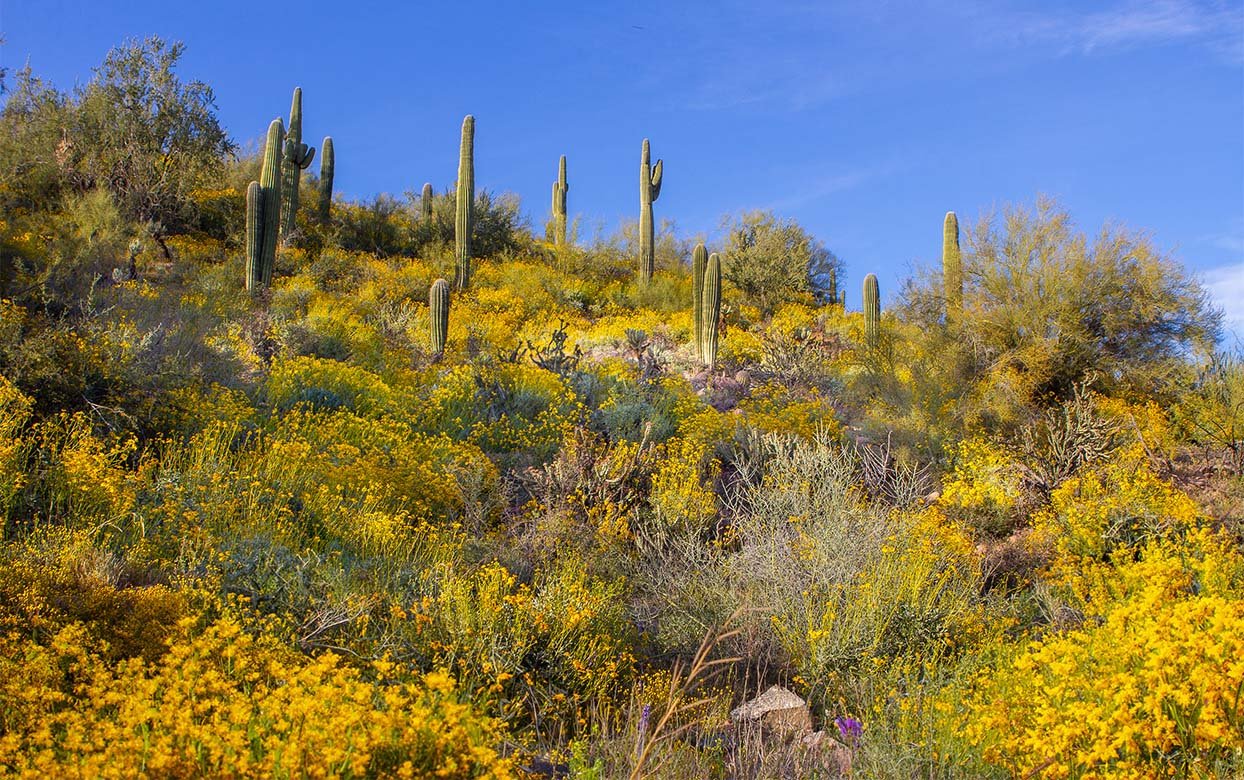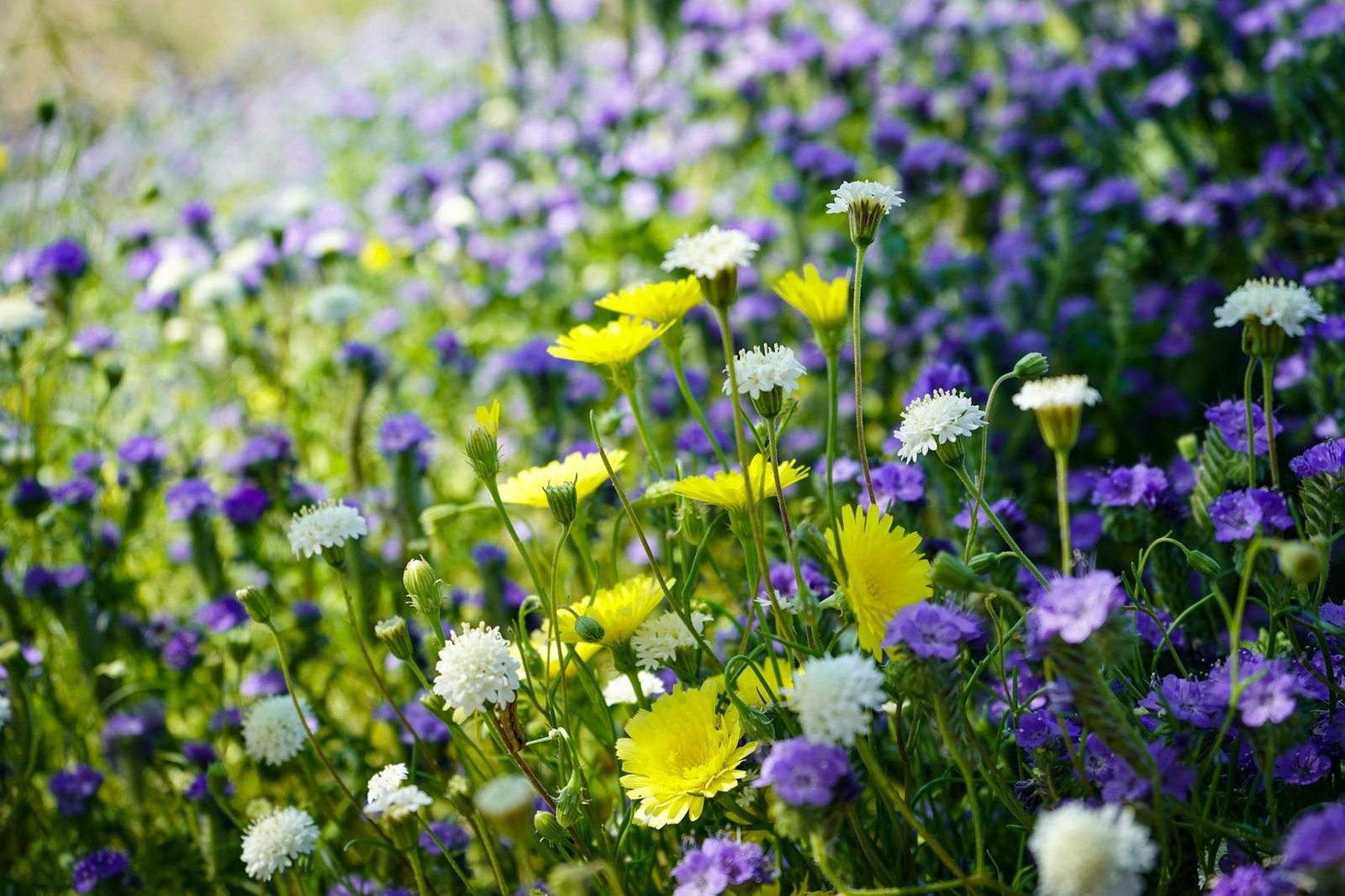
Every spring, the Sonoran Desert pulls off one of the natural world's great spectacles — bare hillsides erupt in sheets of golden poppies, violet phacelia, and cream-white prickly poppies overnight. That transformation isn't magic. It's the result of seeds that have waited, sometimes for years, for exactly the right combination of moisture and warmth. When you plant native desert wildflowers in your own yard, you tap into that same ancient rhythm — and you do it with almost no irrigation, no fertilizer, and very little effort.
This guide covers the best native wildflowers for the Sonoran, Mojave, and Chihuahuan deserts, when and how to sow them, and what separates a stunning meadow from a patchy disappointment. Whether you're filling a bare slope, softening a xeriscape, or creating a dedicated pollinator patch, these are the species worth growing.
Why Native Wildflowers Outperform Everything Else
Introduced ornamentals can look beautiful for a season, but native wildflowers are built for your specific desert. They've co-evolved with local soils, insects, and rainfall patterns over thousands of years. Mexican gold poppies (Eschscholzia californica mexicana) don't just tolerate Sonoran desert heat — they need it. Desert bluebells (Phacelia campanularia) thrive on the shallow, nutrient-poor soils that would kill a garden center annual.
A well-chosen native wildflower planting can support dozens of native bee species, butterflies, and hummingbirds while using a fraction of the water a conventional flower bed demands.
Native wildflowers also link directly into desert food webs. Owl clover provides nectar for queen bumblebees emerging in late winter. Desert marigold seeds feed native sparrows in fall. When you plant natives, you're not just adding color — you're restoring ecological function.
When to Plant: Timing Is Everything
Desert wildflowers split into two main sowing windows, and planting in the wrong one will leave you with bare soil and frustration.
Fall Sowing (October–December): The Preferred Window
Most Sonoran and Mojave wildflowers are cool-season annuals. They germinate in fall rains, grow slowly through winter, and explode into bloom in late February through April. Sow seeds after daytime temperatures drop consistently below 90°F and before your first hard frost. In Tucson and Phoenix, that's typically October through early December. In the Mojave (Las Vegas, the high desert), aim for late September to November.
Fall-sown seeds experience natural stratification over winter — cold nights followed by warming days cue germination at exactly the right moment. If you're just getting started with your desert garden layout, the desert planting calendar covers these windows in detail for each region.
Spring Sowing (February–March): The Backup Option
If you missed the fall window, a late-winter sowing can still work for some species — particularly desert bluebells, arroyo lupine, and sand verbena. Sow as early as the soil can be worked, keep the seedbed moist until germination, then let winter rains take over. Expect shorter, less vigorous plants compared to fall-sown neighbors, but still plenty of color.
Chihuahuan desert gardeners (El Paso, Las Cruces, Albuquerque) face a different rhythm. Their monsoon-adapted species — desert marigold, desert zinnia, and plains coreopsis — want spring sowing with the summer rainy season supplying moisture.
The Best Annuals for a Show-Stopping Display
Mexican Gold Poppy (Eschscholzia californica mexicana)
The Sonoran Desert's superstar. Silky orange-gold cups open each morning and close at night. Extremely drought-hardy once established — a well-placed fall sowing in the Tucson or Phoenix foothills often needs zero supplemental water. Broadcast seed generously on bare, rocky soil; these poppies hate transplanting and don't compete well against weeds, so clear the bed first. Start with a quality Mexican gold poppy seed mix for best germination rates.
Desert Bluebell / California Bluebell (Phacelia campanularia)
Deep violet-blue bells on low, spreading plants — one of the most vivid colors in the desert palette. Blooms January through April in the low desert. Combines spectacularly with gold poppies and white prickly poppies. Excellent in sandy, gravelly soils and performs beautifully in rock gardens or along decomposed granite paths.
Owl Clover (Castilleja exserta)
Rosy-pink to purple spikes that carpet desert grasslands in spring. Owl clover is hemiparasitic, drawing some nutrients from neighboring grass roots — which means it works best sown into an established plant community rather than bare soil. A natural companion in desert companion planting schemes with native bunchgrasses.
Arroyo Lupine (Lupinus succulentus)
Tall, spike-flowered lupines in deep blue-purple that fix nitrogen in the soil as they grow. Common in washes and disturbed slopes throughout the Sonoran and Mojave. Sow directly in fall — lupines hate root disturbance and will not transplant. Their nitrogen-fixing roots improve soil for future plantings.
Sand Verbena (Abronia villosa)
Sprawling stems covered in clusters of vivid pink-magenta flowers. A quintessential Mojave wildflower, sand verbena tolerates the most extreme sandy soils and blooms for months with virtually no care. Plants spread two to three feet across, making them a superb ground-level filler.
The Best Perennials for Year-After-Year Color
Desert Marigold (Baileya multiradiata)
Arguably the most reliable, long-blooming wildflower in the desert Southwest. Bright yellow daisy-like flowers on silvery stems appear from spring through fall — and sometimes through mild winters. Once established, desert marigold reseeds freely and is virtually indestructible in well-drained soil. Superb along driveways and rocky slopes throughout the Chihuahuan and Sonoran deserts.
Blackfoot Daisy (Melampodium leucanthum)
Low, mounding white daisies with yellow centers that bloom continuously from March to November. Blackfoot daisy tolerates rocky limestone soils better than almost any other wildflower — making it the go-to choice for Chihuahuan desert gardens. Tough, compact, and beloved by native bees. Plant in full sun and avoid any supplemental water once established.
Firecracker Penstemon (Penstemon eatonii)
Tall scarlet tubes that hummingbirds cannot resist. Firecracker penstemon blooms in late winter to early spring — right when Anna's and Costa's hummingbirds most need nectar. This perennial thrives in rocky, well-drained soils and pairs beautifully with desert marigold and globe mallow as a season-spanning perennial border.
How to Sow Wildflower Seeds Successfully
The most common wildflower failure is sowing into unprepared soil and then walking away. Desert wildflower seeds are small and need good seed-to-soil contact to germinate. Follow these steps:
- Clear the bed. Remove existing weeds and debris. Scratch the soil surface lightly with a rake or hand cultivator — just enough to break the crust.
- Broadcast evenly. Mix seeds with dry sand (roughly 5:1 sand-to-seed by volume) to help distribute them evenly. Broadcast by hand or with a small hand spreader at the rate recommended on the packet.
- Press, don't bury. Walk over the bed or press seeds in with the back of a rake. Most wildflower seeds need light to germinate and should sit at the soil surface or barely covered.
- Water once to establish. Give the bed a thorough irrigation immediately after sowing, then rely on fall or winter rains. In dry spells, supplement with a gentle overhead spray every 7–10 days until seeds germinate.
- Resist the urge to weed early. Seedlings of poppies, lupines, and penstemon look weedy at first. Wait until they're 2–3 inches tall before removing anything you don't recognize.
For a simple, pre-mixed starting point, a Sonoran or Southwest wildflower seed blend gives you a curated assortment of regionally adapted annuals and perennials without having to source individual species.
A Quick-Reference Table
| Species | Type | Sow Window | Desert Region | Bloom Color |
|---|---|---|---|---|
| Mexican Gold Poppy | Annual | Oct–Dec | Sonoran | Orange-gold |
| Desert Bluebell | Annual | Oct–Feb | Sonoran, Mojave | Deep violet |
| Owl Clover | Annual | Oct–Dec | Sonoran | Pink-purple |
| Arroyo Lupine | Annual | Oct–Feb | Sonoran, Mojave | Blue-purple |
| Sand Verbena | Annual | Sep–Nov | Mojave | Pink-magenta |
| Desert Marigold | Perennial | Fall or Spring | Sonoran, Chihuahuan | Yellow |
| Blackfoot Daisy | Perennial | Fall or Spring | Chihuahuan | White |
| Firecracker Penstemon | Perennial | Fall | Sonoran, Mojave | Scarlet |
Combine Wildflowers with Structure for the Best Results
A wildflower meadow on its own is stunning for two months and bare the rest of the year. The most rewarding desert wildflower plantings combine annuals with long-lived perennials and structural shrubs. Scatter gold poppy and desert bluebell seeds at the base of a desert marigold or globe mallow, and you'll have successive bloom from February through October. For ideas on layering plants by height, water need, and season, the guide to starting your desert garden from scratch covers design fundamentals that apply directly to wildflower planning.
Ready to dig in? Start with the desert planting calendar to nail your sowing window, then pick two or three species from this list for your first season. Wildflowers reward patience — and once they reseed themselves, they just get better every year.
This post contains affiliate links. We may earn a small commission if you purchase through them, at no extra cost to you.