Bare soil is the desert garden's worst enemy. On a 110°F summer day in Phoenix or Tucson, unprotected ground can reach 160°F at the surface — hot enough to cook roots, kill soil biology, and evaporate moisture almost as fast as you can apply it. A proper layer of mulch changes everything. It cools the root zone by 20 to 30 degrees, cuts water loss by up to 70 percent, and suppresses the weeds that compete fiercely with your plants for every drop of moisture.
Mulching in the desert is not the same as mulching in a temperate climate, though. The intense UV exposure, alkaline soils, monsoon flooding, and extreme heat cycles all affect which materials work and how to apply them. This guide covers the organic and inorganic mulches that perform best in Sonoran, Chihuahuan, and Mojave conditions — and explains exactly how to use them.
Why Mulch Matters More in the Desert
In a humid climate, mulch is mostly about aesthetics and weed control. In an arid climate, it's survival infrastructure. Desert soils are often sandy or caliche-heavy with little organic matter, meaning they drain fast and dry out completely between rains. Surface evaporation is relentless from spring through fall.
A consistent mulch layer intercepts this evaporation, keeping the top few inches of soil moist long after a watering event. This is critical for shallow-rooted plants like ocotillo (Fouquieria splendens), brittlebush (Encelia farinosa), and most annual wildflowers. It also moderates the freeze-thaw cycles that damage root systems in higher-elevation Chihuahuan and Great Basin gardens during winter.
University of Arizona Extension research found that a 3-inch layer of wood chip mulch reduced soil moisture loss by 65 percent compared to bare soil — translating directly to fewer irrigation cycles and lower water bills.
Mulch also feeds soil life. The Sonoran Desert has a rich community of fungi, bacteria, and invertebrates living in the top six inches of soil. These organisms break down organic matter, cycle nutrients, and improve soil structure over time. Covering the soil protects these communities from UV radiation and heat shock, making the entire system more productive.
Organic Mulches for Desert Gardens
Wood Chips and Shredded Bark
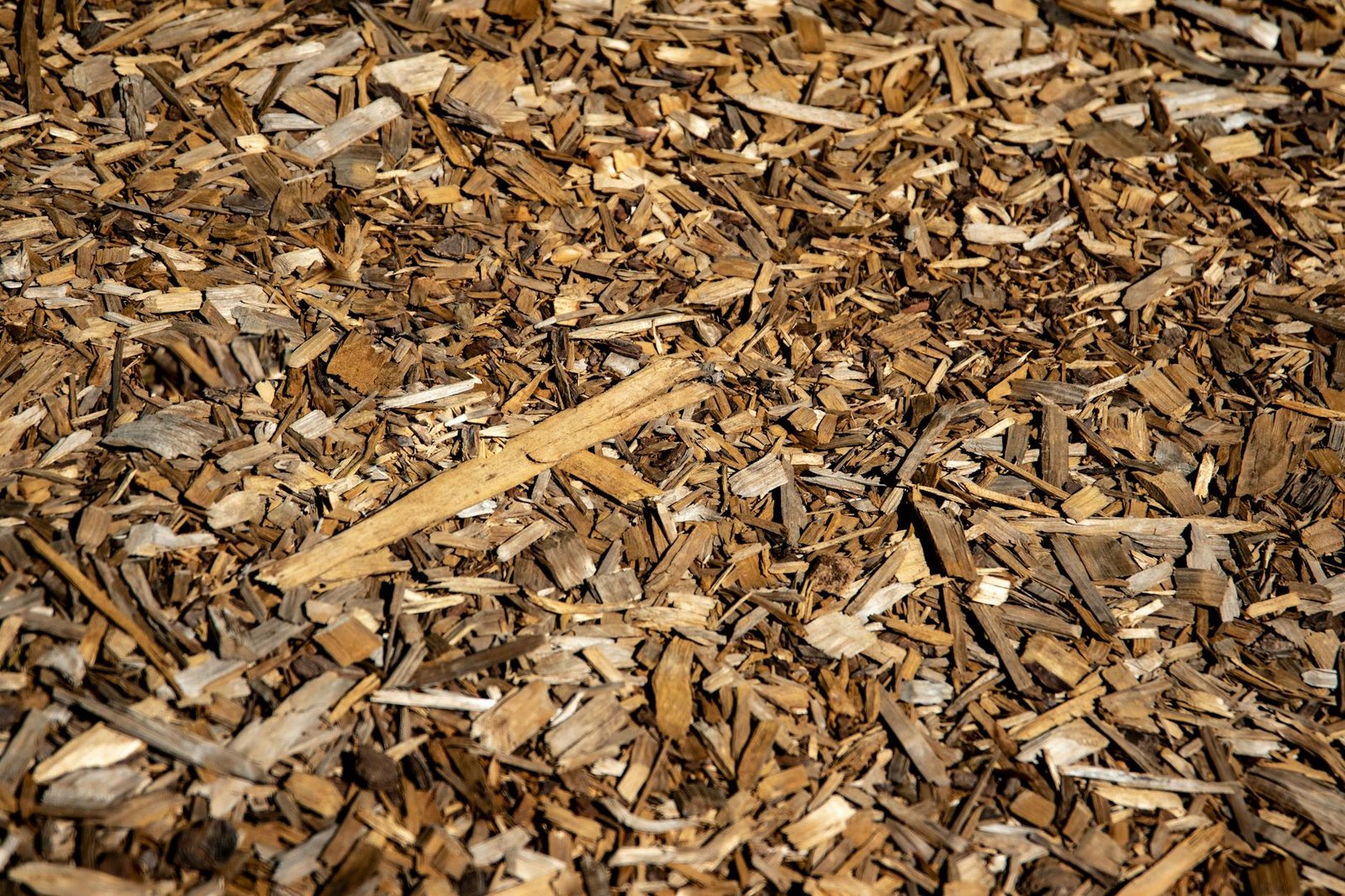
Arborist wood chips are the gold standard for desert garden beds. Unlike uniform wood chips from a bag, arborist chips contain a mix of bark, cambium, sapwood, and leaves that decompose at different rates, feeding soil fungi steadily over two to three years. Apply them 3 to 4 inches deep around shrubs, trees, and perennials, keeping the mulch a few inches away from plant crowns and cactus bases to prevent rot.
You can often get arborist wood chips for free or low cost — many tree-trimming companies are happy to dump loads rather than haul them to a landfill. For smaller areas, bagged shredded bark mulch works well and is easy to spread evenly.
Bark from pine or cedar is widely available, decomposes slowly in arid heat, and carries mild insect-repellent properties. Avoid dyed mulches — the pigments can leach into alkaline desert soils and the manufacturing process often uses low-quality wood that breaks down too quickly.
Straw and Hay
Straw is the best mulch for desert vegetable gardens and raised beds. It's lightweight, easy to spread, allows water to penetrate quickly, and breaks down within one growing season to add organic matter to beds that need it. If you're growing cool-season crops like lettuce, spinach, or carrots during the desert's fall and winter window — as described in our seasonal vegetable guide — straw mulch keeps roots insulated from cold nights and slows moisture loss between irrigations.
Use grain straw (wheat or barley) rather than hay, which may contain weed seeds. Apply 3 to 4 inches deep and replenish each season.
Compost as Mulch
Finished compost applied 1 to 2 inches deep functions as both mulch and soil amendment. It improves water retention in sandy soils and adds microbial life to depleted desert ground. It decomposes faster than wood chips and won't suppress weeds as effectively, but it's excellent as a base layer beneath a topping of wood chips or gravel.
Inorganic Mulches for Arid Landscapes
Decomposed Granite
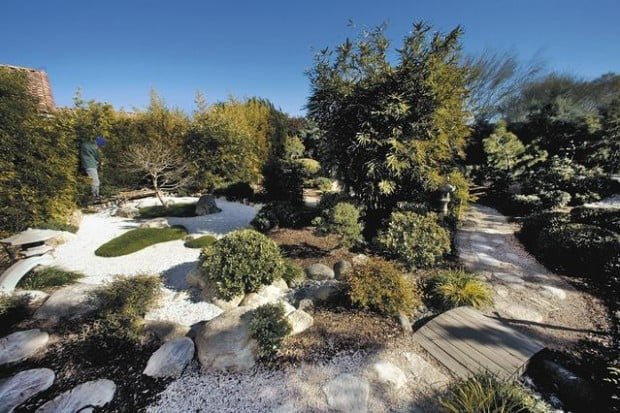
Decomposed granite (DG) is the most common inorganic mulch in Sonoran and Chihuahuan desert landscapes. A 2- to 3-inch layer of decomposed granite suppresses weeds effectively, allows rainfall to percolate into the soil, and creates the rocky, sun-drenched microhabitat that native plants like penstemon (Penstemon parryi), globe mallow (Sphaeralcea ambigua), and desert marigold (Baileya multiradiata) prefer. It also gives desert landscapes a natural, finished look that complements boulders and cacti.
The main limitation is thermal mass. Decomposed granite absorbs and radiates heat, which benefits cold-hardy plants that need warm soil but can stress frost-sensitive species in summer. Pair it with shade from a palo verde or mesquite canopy to moderate the heat load around sensitive plants.
Gravel and Crushed Rock
Pea gravel and crushed limestone are excellent around cacti and succulents, mimicking the rocky substrates these plants evolved on. A 2-inch layer around agaves, saguaro (Carnegiea gigantea), and barrel cactus (Ferocactus spp.) improves drainage at the crown — the zone most vulnerable to rot — while keeping the root zone cool enough for healthy growth.
Avoid placing any stone mulch against the base of plants with soft crowns, like aloe or agave pups. Leave a 4- to 6-inch cleared ring at the crown to allow air circulation.
Flagstone and Boulders
Large flat stones placed around plants serve as living mulch. They shade the soil, reduce evaporation, and create micro-niches where moisture lingers. In nature, desert annuals and perennials frequently germinate in the shadow of rocks — you can replicate this in the garden intentionally.
What Not to Use
Some mulch materials that work fine in other climates become problems in the desert:
- Black plastic sheeting: Blocks water penetration entirely, heats to extreme temperatures in direct sun, and destroys soil biology beneath it. It's the worst possible choice for arid climates.
- Rubber mulch: Retains heat aggressively, can leach zinc and other compounds into soil, and does not decompose to add any organic matter. Avoid it.
- Fresh grass clippings: Clump together when dry, block water infiltration, and can introduce herbicide residue if the lawn was treated. If you use grass clippings, apply them thinly and dried.
- Gravel deeper than 3 inches: Excess gravel depth creates a thermal trap that overheats roots in summer and can make watering less effective as water disperses sideways before penetrating.
How to Apply Mulch Correctly
Application technique matters as much as material choice. Follow these rules for best results:
- Depth: 3–4 inches for organic mulches; 2–3 inches for gravel and decomposed granite. Too thin and it won't suppress weeds or retain moisture. Too thick with organic material around cacti invites crown rot.
- Keep mulch off crowns: Pull mulch back 3 to 6 inches from the base of every plant. Contact with plant stems and crowns traps moisture and creates rot entry points, especially dangerous for cacti and succulents.
- Timing: Apply or refresh mulch in late winter or early spring before summer heat arrives. This locks in early spring soil moisture and gets maximum benefit through the hot months. See our guide on the best time to plant and tend your desert garden for a full seasonal calendar.
- Topping up: Organic mulches decompose and compact. Replenish wood chips every 12 to 18 months. Gravel mulches last much longer but need raking and occasional top-up every few years.
Mulch and Water: The Critical Connection
Mulch works best as part of an integrated water strategy, not a standalone fix. When you mulch before a drip irrigation cycle, the layer holds moisture in the root zone for days longer than bare soil would. Using a soil moisture meter to check conditions below your mulch layer helps you dial in watering frequency precisely — many gardeners find they can reduce their irrigation schedule by 25 to 40 percent after mulching consistently.
If you're also collecting rainwater to supplement irrigation, as we cover in our guide to harvesting rainwater for desert gardens, mulched basins and swales retain captured water far more effectively than bare earth, making your entire water system work harder.
Mulching is one of the highest-leverage habits you can build as a desert gardener. An afternoon spreading wood chips or decomposed granite pays dividends in reduced watering labor, healthier plant roots, and fewer weeds for the entire growing season ahead. Start with whatever material is easiest to source locally, and you'll see the difference within weeks.
Want to dig deeper into water-wise desert gardening? Our guide to watering cacti and succulents correctly pairs perfectly with a smart mulching strategy — together they cover everything you need to keep desert plants thriving through summer's worst heat.
This post contains affiliate links. We may earn a small commission if you purchase through them, at no extra cost to you.